
The Literature Review

My thesis examines the role of the Supernatural and its tie to Environment in post-apocalyptic works. The project will involve the comparison of several texts that engage with post-apocalyptic settings and premises. The primary works covered within this cultural comparison will be Roadside Picnic by the Strugatsky Brothers, Metro 2033 by Dmitry Glukhovsky, The Road by Cormac McCarthy, and Oryx and Crake by Margaret Atwood. The comparative study will explore different approaches to depicting non-human agency and mankind’s relationship to their environment. Some of the selected works, those that emerge from a Russian context especially, employ the Supernatural to emphasise non-human agency more explicitly than the contrasting Anglophone works. My research will include an investigation of the cultural contexts that inform this difference, and what the contrasting approaches imply about these works’ commentary on non-human agency and environmental relationships.

Narratives of utopia and teleological narratives concerning technology, which centre human mastery of nature, form a crucial component in situating the texts. These narratives will contextualise the depiction of environment and space in the cultural contexts from which the differing texts emerged. The work of Lyman Tower Sargent, such as “Colonial and Postcolonial Utopias” or “Colonial Utopias/Dystopias”, will situate my work in concepts, narratives and localisation of Utopia. Sargent’s “The Three Faces of Utopianism Revisited” addresses key concepts of Utopia. Importantly, Sargent defines ‘Anti-Utopia’ as a ”non-existent society described in considerable detail and normally located in time and space that the author intended a contemporaneous reader to view as a criticism of utopianism or of some particular eutopia(positive utopia).“(Sargent, 9) ‘Anti-Utopia’ will provide a key concept for my thesis, parsing post-apocalyptic works as reactions against culturally specific Utopian narratives.

Other critical works utilised to confound this relationship include Edward James’s “Utopia and Anti-Utopia”, Peter Fitting’s “Utopia, Dystopia and Science fiction”, and Jacqueline Dutton’s “‘Non-western’ utopian Traditions”. Elana Gomel’s critical work can situate Roadside Picnic and Metro 2033 as responses against Utopian narratives of Soviet and Post-Soviet culture. “Gods like Men: Soviet Science Fiction and the Utopian Self” and “Science Fiction in Russia: From Utopia to New Age” examine Utopian Russian narratives which contextualise the Russian works’s approaches to Anti-Utopia. Matthias Schwartz links Environment, Soviet Anti-Utopia, and relationship to state narratives in discussion of Metro 2033 in: “Utopia Going Underground: On Lukyanenko’s and Glukhovsky’s Literary Refigurations of Post-socialist Belongings between Loyalty and Dissidence to the State.” To contextualise Environment and anti-utopia narratives further, I will employ Susan Buck-Morss Dreamworld and catastrophe: the passing of mass utopia in East and West. Buck-Morss’s work will provide a counter-part, examining Anglophone and ‘Western’ Utopian narratives. Brian Stapleford’s “Ecology and Dystopia” and Rowland Hughes and Pat Wheeler’s ““Eco-dystopias: Nature and the Dystopian Imagination”, through their eco-critical approach to utopia and dystopia, provide a connection between concerns of environment and (anti-) utopian narratives. This connection is crucial to my thesis’s linking of culturally specific utopian narratives with an eco-critical and environmental approach to post-apocalyptic works.
To situate connections of the Supernatural, Agency, and Environment, I will utilise the concept of the Eco-gothic in my approach. EcoGothic, edited by Andrew Smith and William Hughes, explores the Gothic through eco-criticism with roots in the Romantic and contemporary environmental concerns. Environment becomes a “semiotic problem”(Smith and Hughes, 3), challenging narratives of human subjugation of nature. The Gothic Nature Journal examines this relationship of Gothic, Supernatural, and Nature further: “Nature is consistently constructed in our stories as Other, excessive, unpredictable, disruptive, chaotic, enticing, supernaturally powerful, and, perhaps most disturbingly, alive.”(Parker and Poland,1)Nature as Gothic and Other presents a key theme of my thesis, a relationship advanced by the concept of the Eco-Gothic. Locating the Supernatural post-apocalypse further in ‘weird’ fictions, Roger Luckhurst’s “The weird a dis/orientation” traces a tradition of fictions that lend agency to the non-human through representations of the incomprehensible and supernatural.

Elana Gomel’s Narrative Space and Time: Representing Impossible Topologies in Literature serves as a link between science fiction stories and the Othered environment. Gomel regards the manner in which science fiction stories attempt to represent negative and impossible spaces. The Eco-Gothic environment defies human efforts at order and subjugation in a way that engenders a crisis of representation. Gomel’s examination of impossible spaces and their representation in speculative stories will thus further my thesis’s investigation of post-apocalyptic space.
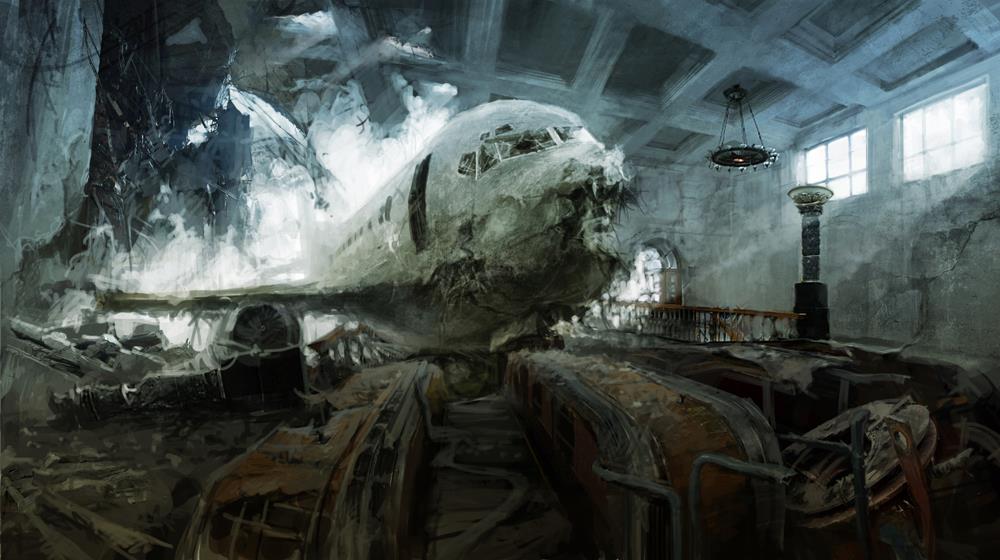
Concept Art from Metro: Last Light, Deep Silver

Discussions of Environment and its relationship to the humans appear in existing critical works that treat my primary case studies.  Such works will strengthen the connection between my theoretical approaches with the close reading of primary case studies. Gabriel Burrow’s “Humanizing Harmont: Place and Desire in Roadside Picnic” targets the setting of the Strugatsky’s Roadside Picnic, investigating the threads between the town, the Supernatural Zone, and desire. Bill Hardwig’s “Cormac McCarthy’s The Road and ‘a world to come’” and Lydia Cooper’s “Cormac McCarthy’s The Road as Apocalyptic Grail Narrative” examine the unusual nature of The Road’s dead landscape. Eco-critical approaches crop up in criticism of Oryx and Crake, such as Nazry Bahrawi’s “Hope of a hopeless world: eco-teleology in Margaret Atwood’s Oryx and Crake and The Year of the Flood” and Valeria Mosca’s ““Crossing Human Boundaries: Apocalypse and Posthumanism in Margaret Atwood’s Oryx and Crake and The Year of the Flood”. These works explore the power of environment and space to affect and mutate human senses of self and definition.

Kathryn Yusoff’s A billion black Anthropocenes or None, “Anthropogenesis: Origins and Endings in the Anthropocene” and “Climate change and the imagination” target different facets of human agency narratives and apocalyptic visions. These examinations will round out my environmental approach through their examination of the ‘Anthropocene’, a term closely tied to human agency. Marginalised visions and contemporary apocalyptic narratives create further nuance in Yusoff’s discussion of agency and apocalypse, which will diversify and refine my research approaches.

The research aims of my thesis draw on a wide range of critical approaches and concepts. The texts here highlighted are in the areas of Utopian Studies, the eco-gothic, and thematic focuses on agency. They are the most prominent among many texts that will connect the post-apocalyptic works’ approaches to the Supernatural, environment, and how they are situated in cultural contexts. While the possibility to dive into fields of Adaptation and Digital Media is available, my thesis may only pursue these avenues if the selected research yields a connection.

Sources

Bahrawi, Nazry, “Hope of a hopeless world: eco-teleology in Margaret Atwood’s Oryx and Crake and The Year of the Flood,Green Letters, Vol.17, Iss.3, pp.251-263.

Buck-Morss, Susan, Dreamworld and catastrophe : the passing of mass utopia in East and West (London: MIT Press, 2002).

Burrow, Gabriel, “Humanizing Harmont: Place and Desire in Roadside Picnic,” Foundation, Vol.50, Iss.140, pp.5-17.

Cooper, Lydia, “Cormac McCarthy’s The Road as Apocalyptic Grail Narrative,” Studies in the Novel, Vol.43, Iss.2 (2011), pp.218-236.

Dutton, Jacqueline, “‘Non-western’ utopian Traditions,” in The Cambridge Companion to Utopian Literature, ed. By Gregory Claeys (Cambridge: Cambridge University Press, 2010),pp.223-258.

Fitting, Peter, “Utopia, Dystopia and Science Fiction,” in The Cambridge Companion to Utopian Literature, ed. By Gregory Claeys (Cambridge: Cambridge University Press, 2010),pp.135-153.

Gomel, Elana, “Gods like Men: Soviet Science Fiction and the Utopian Self,” Science Fiction Studies, Vol.31, No.3 (2004), pp.358-377.

—,  “Science Fiction in Russia: From Utopia to New Age,” Science Fiction Studies, Vol.26, No.3 (1999), pp.435-441.

—, Narrative Space and Time: Representing Impossible Topologies in Literature (New York: Routledge, 2014).

Hardwig, Bill, “Cormac McCarthy’s The Road and “a world to come”, Studies in American Naturalism, Vol.8, Iss.1(2013), pp.38-51.

Hughes, Rowland and Wheeler, Pat, “Eco-dystopias: Nature and the Dystopian

Imagination,” Critical Survey, Vol.25, Iss.2(2013),pp.1-6.

Hughes, William and Smith, Andrew, EcoGothic, (Manchester: Manchester University Press, 2013).

James, Edward, “Utopia and Anti-Utopia,” in The Cambridge Companion to Science Fiction, ed. by Edward James and Farah Mendlesohn (Cambridge: Cambridge University Press, 2003),pp.219-229.

Luckhurst, Roger. “The weird: a dis/orientation,”Textual Practice, Vol.31, Iss.6 (2017), pp.1041-1061.

Parker, Elizabeth and Poland, Michelle, “Gothic Nature, An Introduction,” Gothic Nature, Issue 1, 2019, pp.1-21.

Mosca, Valeria. “Crossing Human Boundaries: Apocalypse and Posthumanism in Margaret Atwood’s Oryx and Crake and The Year of the Flood,Essays, Iss.9 (2013), pp.38-51.

Sargent, Lyman Tower. “Colonial and Postcolonial Utopias,”  in The Cambridge Companion to Utopian Literature, ed. By Gregory Claeys (Cambridge: Cambridge University Press, 2010),pp.200-222.

—. “Colonial Utopias/Dystopias,” in The Oxford History of the Novel in English: Volume 9: The World Novel in English to 1950, ed. by Ralph Crane et al. (Oxford: Oxford University Press, 2018),pp.300-312.

—. “The Three Faces of Utopianism Revisited,” Utopian Studies, Vol.5, No.1, (1994),pp.1-37.

Schwartz, Mathias, “Utopia Going Underground: On Lukyanenko’s and Glukhovsky’s Literary Refigurations of Post-socialist Belongings between Loyalty and Dissidence to the State,” The Russian Review, Vol.75, No.4 (2016), pp.589-603.

Stableford, Brian, “Ecology and Dystopia,” in The Cambridge Companion to Utopian Literature, ed. By Gregory Claeys (Cambridge: Cambridge University Press, 2010),pp.259-281.

Yusoff, Kathryn, A billion black Anthropocenes or None (Minnesota: University of Minnesota Press, 2018).

—, “Anthropogenesis: Origins and Endings in the Anthropocene,” Theory, Culture & Society, Vol.33, No.2 (2016), pp. 3-28.

–, “Climate change and the imagination,” WIREs Climate Change, Vol2, Iss.4 (2011), pp.516-534.
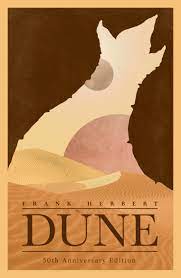
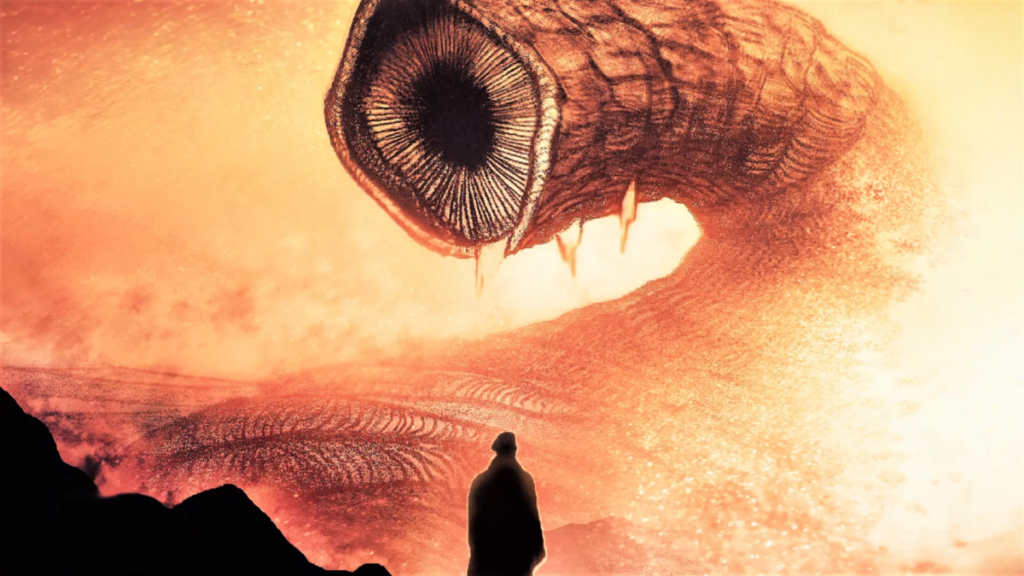
And the worms shall inherit the earth – A literary conspiracy theory

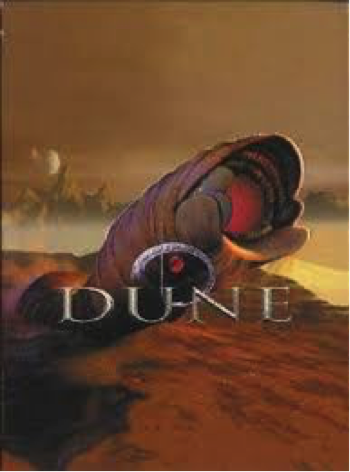
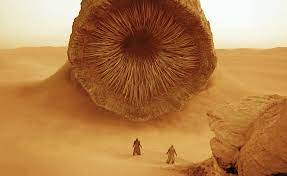
Frank Herbert’s Dune is an influential and seminal work of Science Fiction. With a cult classic adaptation by director David Lynch and an on-going high budget interpretation by Denis Villeneuve, the books of the Dune universe have amassed a sizeable following. Notably, in memetic responses, fans have iconised a particular element of the universe’s lore: The Sand-worms.

Worms feature across serious and joking fan engagement with the books. The 1976 sequel Children of Dune often is a focus of this engagement, because one of its protagonists transforms into a giant immortal sand-worm-human hybrid being. However, this culture around Dune’s worms also draws on the initial 1965 novel. An awareness of this floated in my mind when I read Dmitry Glukhovsky’s post-apocalyptic horror novel Metro 2033. As intrepid protagonist Artyom stumbled upon a cannibalistic cult that worships a giant worm god, that awareness drilled itself to the front of my thoughts. I could not help but wonder, is there a relationship here? And why worms?

It is hard to say if Dmitry Glukhovsky was inspired by Dune’s Sand-worms. Regardless, it would not be surprising if the influence were direct, as one may point to many similarities. Both Sand-worms and The Worm God are worms blown out of proportion, gigantic. They are divine and primordial beings. Although Metro 2033’s Worm God is explicitly a fiction within the novel, it is depicted and lent credence as an old, unfathomable being of creation. The worm, within the cult’s beliefs, created the world and the tunnels, gifting authority over the world to humans in its absence. The worm god is older than humanity, and implied to outlast it, punishing humans for their environmental destruction and violence.

Dune depicts its Sand-worms from two perspectives. Initially, we learn about them from a colonising perspective. The houses that occupy the desert planet Arrakis see the Sand-worms as threats to human mining of the planet’s natural resource, Spice. The noble houses of Dune’s world desire Spice as a highly valuable industrial resource primarily, as it is used for space travel. Throughout the novel the protagonist Paul transitions from allegiance with noble houses to allegiance with the native inhabitants of the planet and desert-people, the Fremen. Our knowledge of Spice and the Sand-worms realigns accordingly.

Initially, the reader learns of Spice as a hallucinatory substance, involved in the Fremen’s rich and nuanced religious rituals. Ultimately, this shift from industrial to spiritual extends to the worms. The novel reveals that the Fremen revere the Worms as Gods, and that the Sand-worms create the Spice. Just as Metro 2033’s worm god, the Sand-worms are ambiguous, ancient forces of creation. The Fremen, unlike their industrialised colonisers, do not have adversarial relationships with the Sand-worms.  An important Fremen rite includes the riding of a Sand-worm.

The Sand-worms form part of a contrasting approach to technology and nature. The Fremen operate on minimal technology and are well adjusted to their desert environment, without becoming ‘noble-savage’ stereotypes. Their counterparts, industrialised oppressive rulers, on the other hand, are aligned with an idea of industrialised modernity. They are at odds with the desert and view the natural environment as an exploitable resource.

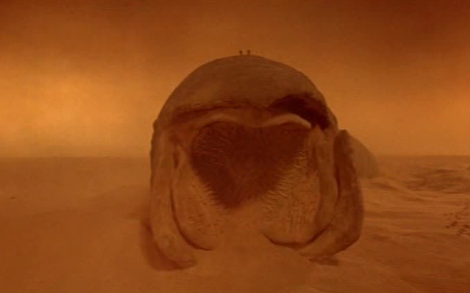
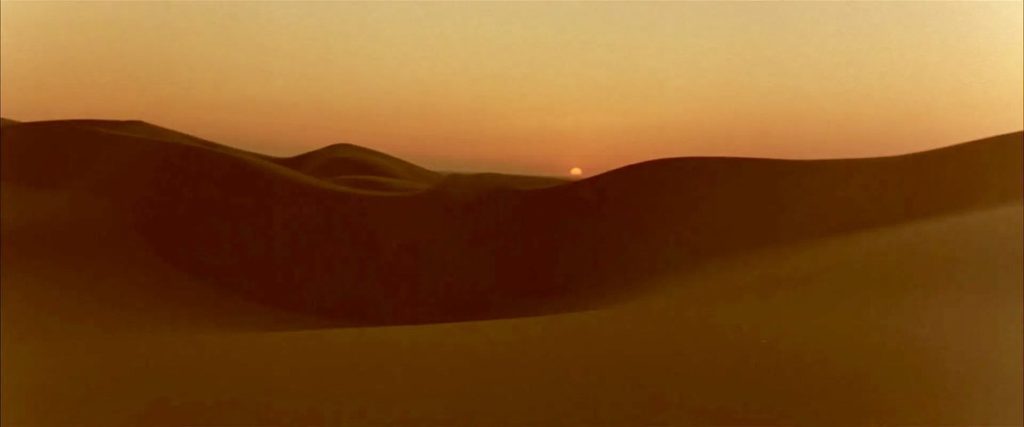
Arrakis or Dune, Dune (1984)

Worms as a force of nature and environment, opposite to technology, persist similarly in Metro 2033. The old man who invents the Worm religion creates it as anti-technology, demonising modernised man and his environmental destruction. The worship of the worm God includes ceding agency to a natural primordial force, and atoning for mankind’s scarring of nature. The cult rejects technology in their life and returns to pre-modern technologies such as bow and arrows. They present one of the only factions in the novel without guns, displaying active hostility towards them.

Here we have a core similarity then: Worms in both works are powerful agents of the natural world. They are counter points of agency, aligned with the environment and primordial, pre-human creation. It is worth pointing out that the portrayal of their people differs: the reader will automatically sympathise less with the cannibal cult than with an exploited and hunted indigenous people. But this does not diminish that their respective worms seem to communicate the same message about and relationship with natural forces. That kind of relationship resonates in these two works that engage with the apocalypse, though be it in different ways.

Artistic rendering of face off between Worm cultists and armed protagonists in Metro 2033, Cheval-tigre (CG Society)

But, while this answers my first question- is there a relationship-, my second question remains. Why worms? I can only theorise, but one key possibility stands out to me. Let me take you on my little conspiratorial route.

Worms, unlike other animals, have a bigger capacity for the alien. In Dune, they are quite literally alien, in the sense of extra-terrestrial. But worms are also alien in the sense of being estranged from the human, or what we can personalise. Humans generally seem to more easily anthropomorphise or generate empathy for certain animals. I would boldly generalise that the more features humans share with an animal, the easier they empathise or find the animal aesthetically pleasing. Insects generally receive less empathy than most other animals with their exoskeletons, many legs, too many eyes, or other features many humans find revolting.

Worms are slimy and squishy, flexible. They are, unlike us, not vertebrate, without a backbone. They have neither interior skeletons nor exoskeletons. Most notably, they have no eyes. Many design theories often argue that eyes in particular aid humans to identify and humanise creatures. One could look at District 9’s choice to give its alien protagonist, with whom the viewer is meant to sympathise, child-like eyes, big and round. On the other hand, the Alien Franchise designs its dangerous Xenomorphs completely without eyes. If we appropriate this theory for our eye-less worms then, one may argue that worms are in many ways a type of life that is aesthetically and conceptually far enough removed from humans to make them prime candidates for alien beings.

Commonly, we also associate worms with the earth in which they life buried. There is a link to death here as well, through expressions associated with death that feature worms: “Counting worms” or “Food for worms”/ ”Worm Food”. Of course, worms cannot even leave behind in their death the bones whose company they keep. If the two discussed works posit their worms as outlasting humanity, so do some of our English common expressions.

Worms are beings, then, which can be easily made alien and associated with the most primal natural element, the Earth. They carry connotations of outlasting us buried in the deep earth. Dune and Metro 2033 utilise them as an apt tool to tap into our relationship with the Earth and our Environment. These stories imagine primordial forces that are alien to humanity and more long-lasting, creators of the space mankind inhabits, with worms as their willing vessel.

Memetic though it can be, these imaginings are certainly not coincidental and are extremely telling. They glimpse into how stories dissect industrialisation, technology, and modernity, and the role nature and environmental agency must play in those considerations. They tease the fading horizon of humanity and picture the Earth’s alien invertebrate inheritors.

Fan Art of Sand-worm, WikiData

Post-apocalyptic Naturalism, the Road, and the Last of Us

Back in October I snuck into a Symposium on American Literary Naturalism and the Visual/Digital held in UCC, excited by a glimpse of academic Video Game discussion. On that day the 13th, Sarah McCreedy discussed New Naturalism and Video Games, with a particular focus on Naughty Dog’s 2013 post-apocalyptic action adventure The Last of Us.

She argued that though less discussed, video games such as The Last of Us engage with a new kind of naturalism. This new naturalism updates conceptions of determinism, instead highlighting the illusion of free will under neoliberal capitalism.

The Last of Us depicts a type of quint-essential American story, a journey across America that is ultimately fruitless. In the process, it features moments of beauty and nature. It also emphasises an intent of being grounded and realistic, honing in on resource allocation and scarcity among other features. As such, it resembles other American works of Naturalism. I myself recently read Cormac McCarthy’s The Road, a novel to which The Last of Us closely relates. Both works track a journey across a changed American landscape, a landscape that inspires awe both in negative and positive senses.

Sarah McCreedy’s conception of The Last of Us as an updated type of Naturalistic story explores media interaction and its fascinating impact. Video games engage in a dance of interactivity with their player. There is a relationship between player, game, and character that implies choice for the player, a power to shape their own, personal experience. This idea of Free Will turns out to be deceptive, McCreedy argued, as the linearity of the plot comes to light. The player cannot impact the choices Joel, the game’s protagonist, makes in cut scenes and vital plot moments. I find this observation interesting for its awareness of medium. The Last of Us and The Road share a lot of similarities. However the idea that the themes and messages of these stories transforms due to the ways Readers/Players experience the respective text spawns fascinating questions. Maybe The Road does create a sense of determinism through its introduction of slowly creeping threats and the passivity the reader holds as, for example, the protagonist’s deadly sickness develops. The Last of Us threads the player and Joel together, but the player is alienated from Joel in the most crucial ending moments, rupturing the player’s conception of choice. That kind of illusion of Free Will and deceptive personalised experience permeates a lot more Video Games than The Last of Us. Does this make Video Games an art form suitable to thrive in Neo Liberal Capitalism?

I could write about the latter question at length. Many Role Playing Games, Action-Adventure Games, and Shooters offer moral choices and customisation of character to differing degrees. But since the programming of the game must be realisable, the large scale impact of these choices often only goes so far as a few different endings to achieve. One of my favourite game series, the Bioshock Series, tackles questions of Free Will by denying the player significant choice and impact. The first game in particular weaves the player’s lack of free will into its plot, accompanying a critique of libertarianism and exploitative capitalist structures.

From the film The Road(2009)

Yet, the note on which I want to conclude is different. Honouring the Naturalistic work’s focus on nature, there is an additional argument I would venture to make. The Road and The Last of Us are both works of the post-apocalypse, of the transformed environment and natural space. Their different approaches to choice and the illusion of free will are present in their approaches to post-apocalyptic space. Both perpetuate a conception of lack of human agency and choice in worlds which have been taken away from human authority. Both texts further engage with the threat of human extinction. Meanwhile, nature has reclaimed and eroded human buildings and landscapes. In The Road, the conquering of mankind by the dead world around them is deterministic, and uncontested. People may struggle against each other, but they can only run away from the snow, darkness, earthquakes and fires.

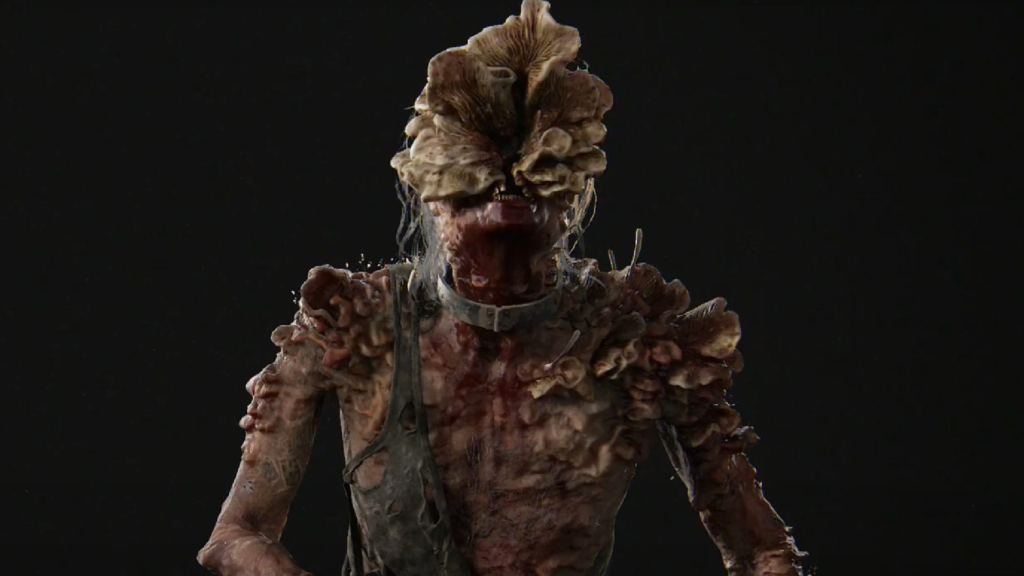
Infected from The Last of Us

As Zombie media, The Last of Us provides undead enemies which the player fights as well as other humans. The virus that creates the undead, a fungi, links them to nature. They look no longer human, appearing overgrown. Through them, the player is given agents of the transformed natural space to combat. As a result, the game provides an illusion of ability to fight the post-apocalyptic natural space, unlike The Road. It is a miming of human agency that turns out to be as deceitful as the game’s Free Will, as the quest to find a cure dissolves.

Applying the paper’s argument to space reveals a core aspect of the post-apocalyptic genre. Agency, human systems, and the Natural link between each other to reveal multitudes of causality and effect. Naturalism, new or old, forms but only one approach to our place in a transformed world.

Video Game Culture is developing an Auteur problem

It is incredibly likely that most people, who in any way like films, have interacted with the idea of the ‘auteur’. Alfred Hitchcock, Christopher Nolan, or Quentin Tarantino are only few of the countless directors who have received the ‘auteur’ label with their distinctive styles and creative visions. Useful as the term can be for discussion, there is no shortage of criticism of the way it reduces the complex creativity of a collaborative medium, and the way it frequently favours men. These issues rear their head once more with the rise of a new kind of auteur: The Video Game Auteur.

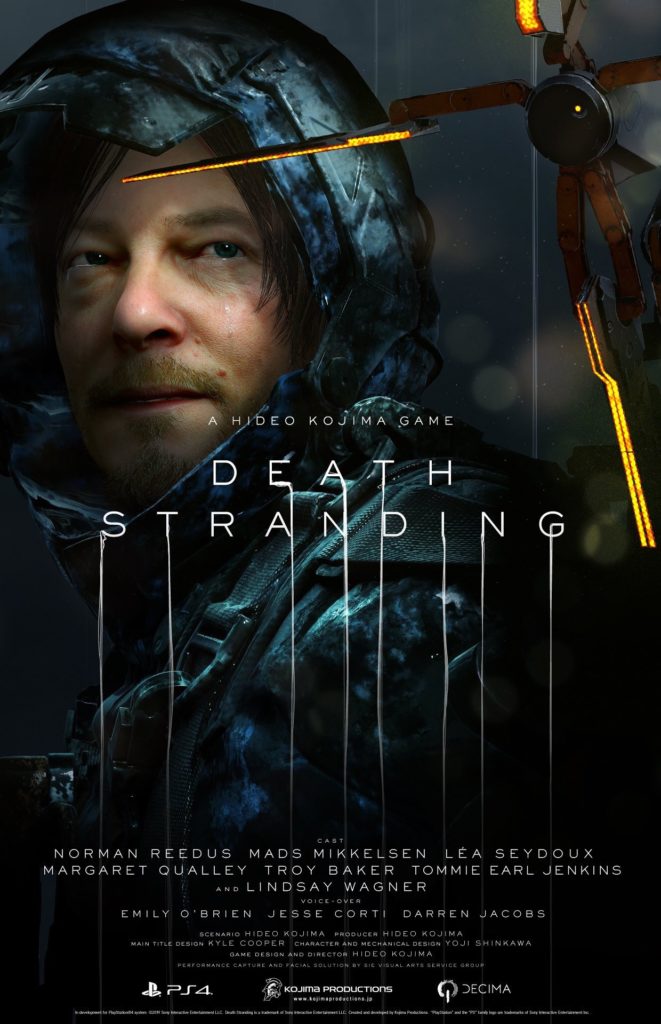
Since Video Games have increasingly earned legitimacy as an art form in the eyes of wider society, the Video Game auteur has also gained traction. Hideo Kojima, widely known for his distinctive work on the Metal Gear Solid Series, stands in the vanguard. In 2019, Hideo Kojima’s released his first production under his eponymous Studio, “Death Stranding”. The game, for which a sequel is currently in development, is a post-apocalyptic story revolving around the reconnecting of communication within humanity. The ambitious game prompted accolades from acclaimed directors and cinema figures such as J.J. Abrahams. Established film-industry figure applauded Kojima’s cinematic sensibility and strong authorial vision, invoking the concept of the auteur.

“Death Stranding” itself displays a preoccupation with male creation and creativity. The game features performances by renowned cinematic voices such as Guillermo Del Toro and Edgar Wright. Alongside them the player encounters characters played by a variety of male creators. They range from Japanese writer Junji Ito, to comedian Conan O’Brien, to Sam Lake, creative director of Max Payne and often credited as an auteur. “Death Stranding” engages with themes of male creation and reproduction through its protagonist and his “Bridge Baby”, a living, preserved, stillborn child carried at all times. Korine Powers, Phd candidate at Boston University, notices that women within the game, on the other hand, are barren, and their attempts at reproduction fail. The game’s world is a world without female creation.

Hideo Kojima’s “Death Stranding” as a result becomes a microcosm of the Video Game auteur. The game is clearly courting the label, celebrating male creative individuals. But it also reproduces the sexist bias of the auteur label, its hesitance to credit female creativity.

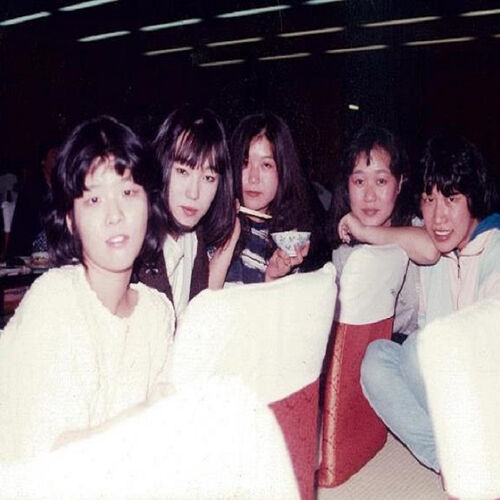
In the Video Game Industry, rife with misogynistic bias and predominantly occupied by men, that is an issue. Historically, women have been excluded from credit in creative roles. Musicologists by the names of Andrew Lemon and Hillegonda Rietveld have conducted valuable research on the exscription, or exclusion, of women, studying the all-female Capcom Sound Team of the early 1980s. These hugely creative women were nearly lost to history due to the company’s pseudonym crediting policies. Crediting remains a perennial issue, despite its importance in a hugely competitive industry.

Capcom 1980s Sound Team (Source: Deezer)

The issue of written credits is more literal than the issue of the auteur. However they broadly interlink. The contributions of the multitudes of creative, hard-working developers, musicians, and writers, will get lost if our discussions treat games as the children of a single genius mind. While the reference to an individual ‘Auteur’ creator may be useful, the term erases the collaborative dreams and sweat that make a game. At worst, it can misattribute art, producing misinformation of creation. The effect is, in essence, the erasure of credit.

In many ways, Video Games are still a relatively young medium. That means that their history is still in the process of shaping. Rejecting the Video Game Auteur as a sign of legitimacy is a valid, achievable option. Several figures within the industry have stood up for games’ communal creativity, despite finding themselves on the receiving end of the label. Warren Spector, who has worked on influential Immersive Simulator games such as “Thief” or “Deus Ex”, has been fighting the label ‘the creator of Deus Ex’ since the 2000s. Josh Sawyer continuously emphasises the team of developers responsible for the beloved game “Fallout: New Vegas.” Video Game culture does not need to follow the narratives of cinema to hold its claim as an art. The opportunity to embrace a history of diverse and multi-fold creativity lies still in reach.

Sources

Andrew Lemon and Hillegonda C.Rietveld, “Female credit: Excavating Recognition for the CapCom Sound Team” & “The Street Fighter Lady. Invisibility and Gender in Game Composition”

IGN, “Deus Ex 2”

Korine Powers, “Playing Pregnant in Death Stranding”

The Uncomfortable Romance Of Role Playing Games

Love can be strange to represent in video games. Outside of dating simulators or other explicitly dedicated games, Role Playing Games (RPGs) such as Bethesda Studio’s iterations of the Elder Scrolls or the post-apocalyptic Fallout series, frequently offer the player choices for romance. As Bethesda is gearing up for the release of their new RPG, Starfield, I want to look closer at systems of romance in previous Bethesda games. Such an examination presents curious results. Romance systems can offer avenues to enjoyment and queer content. But at their core they can also tell us how people approach love in real life.

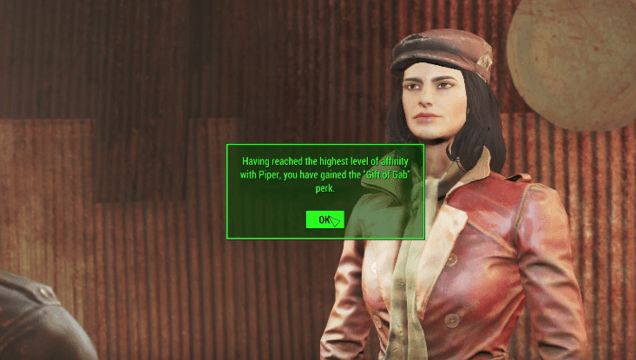
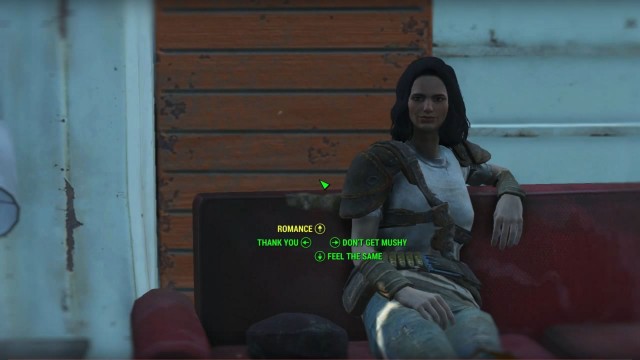
The Elder Scrolls V: Skyrim falls short in its options for romantic companionship. To marry in Skyrim, the player presents a specific artefact to their partner of choice. That spouse then benefits the player in transactional ways, often sharing goods and income. Useful, yes, but not much of a shot at depicting romance. One of Bethesda’s other games, Fallout 4, makes a more earnest effort. The player here can romance most (and any amount) of their companions through dialogue options. These options appear if the companion morally approves of the player’s actions, maximising the companion status. The relationship is then further enhanced through the completion of companion quests, which only surface when the companion trusts the player.

Artefact used for Romance in Skyrim

The result of the developed romance mainly consists of occasional romantic dialogue, and cheeky corner animations after sleeping. In a way, this brings us closer to actual love and romance at least; the player has to appeal to their companion through their actions and characterisation. As a result, such romances can be fun to achieve, especially for any players that wish to create queer content in their RPG experience, as all romance-able characters will be attracted to the player regardless of their gender.

Relationship development boons in Fallout 4
Dialogue Option in Fallout 4

Yet, as enjoyable as using these mechanics can be, there is something inherently odd about them. Due to their optional nature, they never affect a player’s gaming experience significantly. Your companions in the end are still a transactional boon as far as the game is concerned. Everything else is left solely to the player’s imagination of a NPC(non-player character) with little dimension. The reality of their emotion and romance bears little depth to the characters and their world. It contributes to the feeling that the world of the game is made for you, the player. It revolves around you, its inhabitants ready to offer quests, be romanced, or shot.

To allude to the concept of the ‘Gay Button’, Romance mechanics are also not a satisfying definite inclusion of queerness, since only the player can initiate queer content. In contrast, I think RPGs without real romancing options can often be much stronger. Games such as Fallout: New Vegas or The Outer Worlds instead give their characters innate sexualities and identities that affect how they interact with the world around them. As a result, the game’s world feels more immersive. The world is made for the player, but it feels like it could exist on its own. That yields bigger benefit to me than creating a virtual romance thought experiment.

Philosophically, the idea of love as something you can achieve, with anyone, with the right kind of lines, resonates uncomfortably with modern dating discussions.

At its most harmless, it reminds me of the way people can talk about online-dating. There is this idea of making love logical, of having a set of lines that guarantees success. In dedicated communities, participants seem to attempt generalised advised about how profiles should look like, or what opening lines will guarantee success. The complexities of attraction and conversational dynamics become streamlined into over-promising codes and guides. This is not to say that anyone can be blamed for investing in this promise. Relationships are difficult, and it is natural to wish for a simpler narrative. But ultimately, they are still oversimplified narratives.

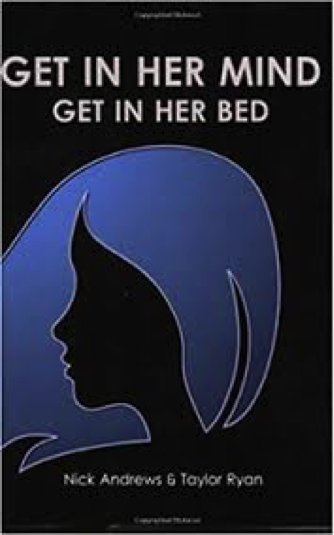
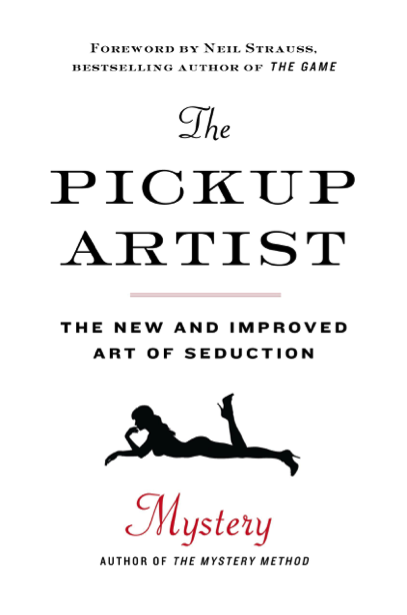
A parallel at its worst, the ideology of Pick Up Artists treats women like an RPG Romance system treats NPCs. They are not given interiority, but reduced to calculable responses and behaviours. It is not uncommon to hear about women’s “programming” by such people. They predict the outcome of certain dialogue lines and ‘openers’ or actions in their ‘game’, not giving much regard to the object of their desire.

But what is the point of such an abstract discussion of a mere fun game mechanic? Well, maybe games replicate life a lot more than we think. Maybe games with one-note Romance systems are not as fun as thoughtful characters because they replicate something that does not help love in real life either. If the media we consume shapes how we interact with the world and people around us, it bears thinking about what fantasies about romance our media sells to us. Love and Romance is complicated, but much more successful when we respect our partners’ feelings and interiority. The temptation to retreat into simpler, classifying narratives provides little benefit. The more depth we allow for, the more we can make out of relationships.

The Magnus Archives: Elevating the Eldritch

“Make your Statement, face your Fear”

As of late, I have been revisiting one of my favourite podcasts, The Magnus Archives. Re-experiencing a piece of media always presents an interesting perspective. In this case, I found my attention drawn to how this particular story works, the ways it constructs its horror. Horror especially is an interesting genre for this kind of reflection. Similarly to Science Fiction or Fantasy, there are personas who’s DNA can be traced in most new additions. The Magnus Archives possesses a truly noteworthy relationship to one of the titans of horror: HP Lovecraft.

  However, first I ought to provide context. The Magnus Archives is a horror podcast published by Rusty Quill, written largely by Jonathan Sims, directed by Alexander J Newall. It features a diverse cast, though Jonathan Sims voices the majority of episodes as the self-titled Head Archivist of the Magnus Institute.

The podcast revolves around the Magnus Institute in London, a paranormal research institution. A typical episode features a ‘statement’, a personal tale of paranormal occurrence, given to the Archives, surrounded by a larger story via pre- and post-Statement segments.

Jonathan ‘John’ Sims has recently taken over the position of Head Archivist. He initially seeks to record Statements with the goal of organising the chaotic Archives, left behind after the death of his precursor. Throughout 4 seasons of the podcast, John and his colleagues become increasingly embroiled into the mysterious events of their work, learning about and being marked by the powers lurking behind their world. The final season deals with the apocalyptic world that results from a multi-season arc.

The Magnus Archives presents a dense, immersive world, full of rich lore. I could write an entirely separate post about the how the podcast utilises and integrates its format, as for example, everything we hear is recorded in-universe.

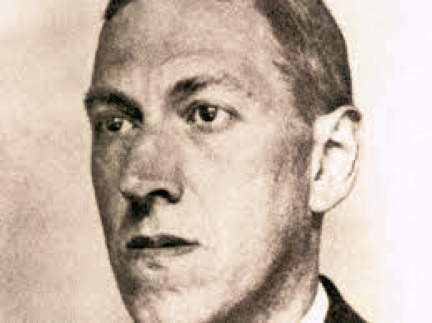
But, as promised, in this post I will examine the podcast’s relationship to Howard Phillips Lovecraft.  HP Lovecraft’s reputation in horror is for unique existential horror.

Lovecraft’s lore of the  ‘Great Old Ones’ regards immensely powerful God-beings that lurk behind the curtain of reality, wishing to break into the world. The unimaginable cosmic horror of the Eldritch Gods lends Lovecraft’s work an unsettling horror of powerlessness in the world. The Magnus Archives invokes a similar concept. The powers that cause all paranormal events are ‘the Fears’, fourteen interconnected entities that are not truly a part of the story’s reality. Working through avatars and devotees, the Fears seek to breach the veil of reality, to feed on humans’ fear effortlessly. Those devoted to individual Fears treat them like Gods, and many of the Fears’ worshippers form cults. The podcast itself often speculates upon the Fears as gods, even if the characters clarify they are no concrete entities. Regardless, the connotation is inescapable: The Fears ultimately enter the story’s world through a Ritual and Incantation.

The kind of Horror that comes with their own eldritch entities resembles Lovecraft’s existential Horror. We can take John as a case study for this. John becomes corrupted and changed throughout the Podcast series, as agents of the Fears continually manipulate him. Even though he acquires knowledge about the world, he always remains two steps behind. He morphs into an agent of a Fear, the Eye, against his will; consequently he questions the extent of Free Will and power he has over his actions. Ultimately, he becomes the tool of causing the apocalypse against his will. John is merely one case study of the ways in which people are preyed on by powers out of their control, constructing a world in which individuals feel lost and powerless.

Yet the Magnus Archives also recognises that this kind of existential horror can feel analogous to the systematic exploitation, especially for marginalised people. The story’s cast features a lot of diversity. It is abundant in queer characters and characters coded to be of colour. The format of the statements, each given by different people, is able to cut across a vast section of society.  Many statements invoke the exploitation and corruption of war, prejudice against immigrants, or police brutality. The horror of systems feels especially existential because all main characters come to realise they are unwilling participants and agents of the Fear’s predation. By implicating the characters within these predatory systems, the story conveys the horror of systems in which we are enmeshed but cannot escape.

Additionally, the Magnus Archives makes sure not to racially code its antagonists. Many of the cults, unlike Lovecraft’s mixed-racial Voodoo cults, read as Christian-like. When statements involve cursed locations, these travels involve Europe or North America, exposing a horror within.

The podcast shines here as a piece of media inspired by Lovecraft, by avoiding the pitfalls of Lovecraft. Because – to address the Elephant in the room – Lovecraft’s writings are famously profoundly racist. Yet, Lovecraft’s horror often still speaks to the existential feelings of horror marginalised outsiders can feel. (I will link an interesting video discussing this angle below). The Magnus Archives recognises the potential of Lovecraft’s horror and twists its interpretation to brilliantly fulfil a modern, engaging approach.

The Magnus Archives truly goes beyond in its apocalyptic vision. Unlike Lovecraft’s Old Ones, the Fears ultimately succeed. The world depicts what I would imagine as a Lovecraftian Apocalypse. Space and Time are suspended. The world functions differently in pockets across space. Death and human physical needs cease to exist. It is a world of nightmares, but since it is a logical extension of the previous story, the apocalyptic world heightens the horror of systematic exploitation. The Fears’ pockets construct loops and mini-ecosystems of fear that entrap humans in endless loops of fear and suffering.  

It is difficult to execute Lovecraftian Horror well. It is certainly difficult not to inherit the problematic elements and tropes that permeate horror. The Magnus Archives executes an intelligent, medium-specific Lovecraftian Horror that elevates its inspirations. In this way, it is a horror story of modern sensitivity that I can only highly recommend.

Recommends and Sources

The Magnus Archives: https://open.spotify.com/show/5pwBAjuJJAOt7cED5Lkjnk

“Outsiders: How to Adapt H.P. Lovecraft In the 21st Century” : https://www.youtube.com/watch?v=l8u8wZ0WvxI

Images: – Original Podcast Logo and Current Podcast Logo: Soundcloud

– Picture of HP Lovecraft: Wikipedia