
Post-apocalyptic Naturalism, the Road, and the Last of Us

Back in October I snuck into a Symposium on American Literary Naturalism and the Visual/Digital held in UCC, excited by a glimpse of academic Video Game discussion. On that day the 13th, Sarah McCreedy discussed New Naturalism and Video Games, with a particular focus on Naughty Dog’s 2013 post-apocalyptic action adventure The Last of Us.

She argued that though less discussed, video games such as The Last of Us engage with a new kind of naturalism. This new naturalism updates conceptions of determinism, instead highlighting the illusion of free will under neoliberal capitalism.

The Last of Us depicts a type of quint-essential American story, a journey across America that is ultimately fruitless. In the process, it features moments of beauty and nature. It also emphasises an intent of being grounded and realistic, honing in on resource allocation and scarcity among other features. As such, it resembles other American works of Naturalism. I myself recently read Cormac McCarthy’s The Road, a novel to which The Last of Us closely relates. Both works track a journey across a changed American landscape, a landscape that inspires awe both in negative and positive senses.

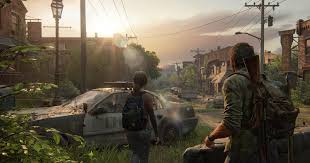
Sarah McCreedy’s conception of The Last of Us as an updated type of Naturalistic story explores media interaction and its fascinating impact. Video games engage in a dance of interactivity with their player. There is a relationship between player, game, and character that implies choice for the player, a power to shape their own, personal experience. This idea of Free Will turns out to be deceptive, McCreedy argued, as the linearity of the plot comes to light. The player cannot impact the choices Joel, the game’s protagonist, makes in cut scenes and vital plot moments. I find this observation interesting for its awareness of medium. The Last of Us and The Road share a lot of similarities. However the idea that the themes and messages of these stories transforms due to the ways Readers/Players experience the respective text spawns fascinating questions. Maybe The Road does create a sense of determinism through its introduction of slowly creeping threats and the passivity the reader holds as, for example, the protagonist’s deadly sickness develops. The Last of Us threads the player and Joel together, but the player is alienated from Joel in the most crucial ending moments, rupturing the player’s conception of choice. That kind of illusion of Free Will and deceptive personalised experience permeates a lot more Video Games than The Last of Us. Does this make Video Games an art form suitable to thrive in Neo Liberal Capitalism?

I could write about the latter question at length. Many Role Playing Games, Action-Adventure Games, and Shooters offer moral choices and customisation of character to differing degrees. But since the programming of the game must be realisable, the large scale impact of these choices often only goes so far as a few different endings to achieve. One of my favourite game series, the Bioshock Series, tackles questions of Free Will by denying the player significant choice and impact. The first game in particular weaves the player’s lack of free will into its plot, accompanying a critique of libertarianism and exploitative capitalist structures.

From the film The Road(2009)

Yet, the note on which I want to conclude is different. Honouring the Naturalistic work’s focus on nature, there is an additional argument I would venture to make. The Road and The Last of Us are both works of the post-apocalypse, of the transformed environment and natural space. Their different approaches to choice and the illusion of free will are present in their approaches to post-apocalyptic space. Both perpetuate a conception of lack of human agency and choice in worlds which have been taken away from human authority. Both texts further engage with the threat of human extinction. Meanwhile, nature has reclaimed and eroded human buildings and landscapes. In The Road, the conquering of mankind by the dead world around them is deterministic, and uncontested. People may struggle against each other, but they can only run away from the snow, darkness, earthquakes and fires.

Infected from The Last of Us

As Zombie media, The Last of Us provides undead enemies which the player fights as well as other humans. The virus that creates the undead, a fungi, links them to nature. They look no longer human, appearing overgrown. Through them, the player is given agents of the transformed natural space to combat. As a result, the game provides an illusion of ability to fight the post-apocalyptic natural space, unlike The Road. It is a miming of human agency that turns out to be as deceitful as the game’s Free Will, as the quest to find a cure dissolves.

Applying the paper’s argument to space reveals a core aspect of the post-apocalyptic genre. Agency, human systems, and the Natural link between each other to reveal multitudes of causality and effect. Naturalism, new or old, forms but only one approach to our place in a transformed world.
Video Game Culture is developing an Auteur problem

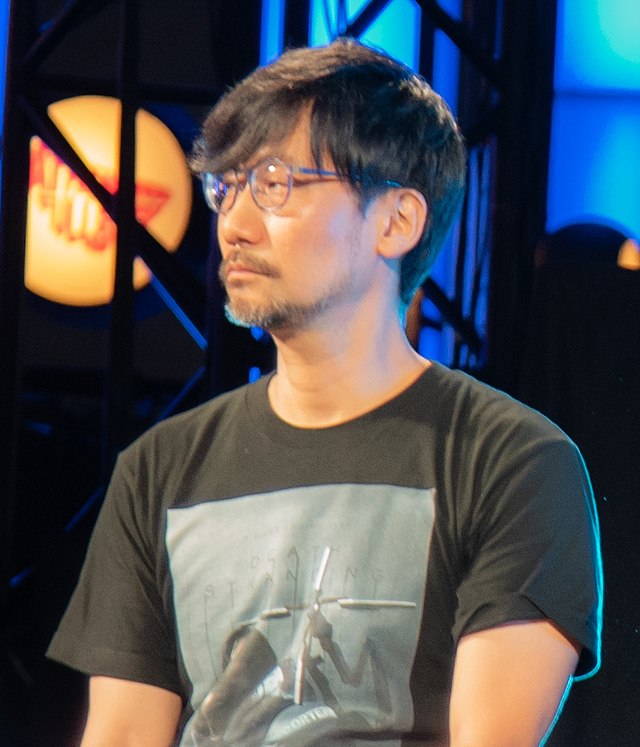
It is incredibly likely that most people, who in any way like films, have interacted with the idea of the ‘auteur’. Alfred Hitchcock, Christopher Nolan, or Quentin Tarantino are only few of the countless directors who have received the ‘auteur’ label with their distinctive styles and creative visions. Useful as the term can be for discussion, there is no shortage of criticism of the way it reduces the complex creativity of a collaborative medium, and the way it frequently favours men. These issues rear their head once more with the rise of a new kind of auteur: The Video Game Auteur.

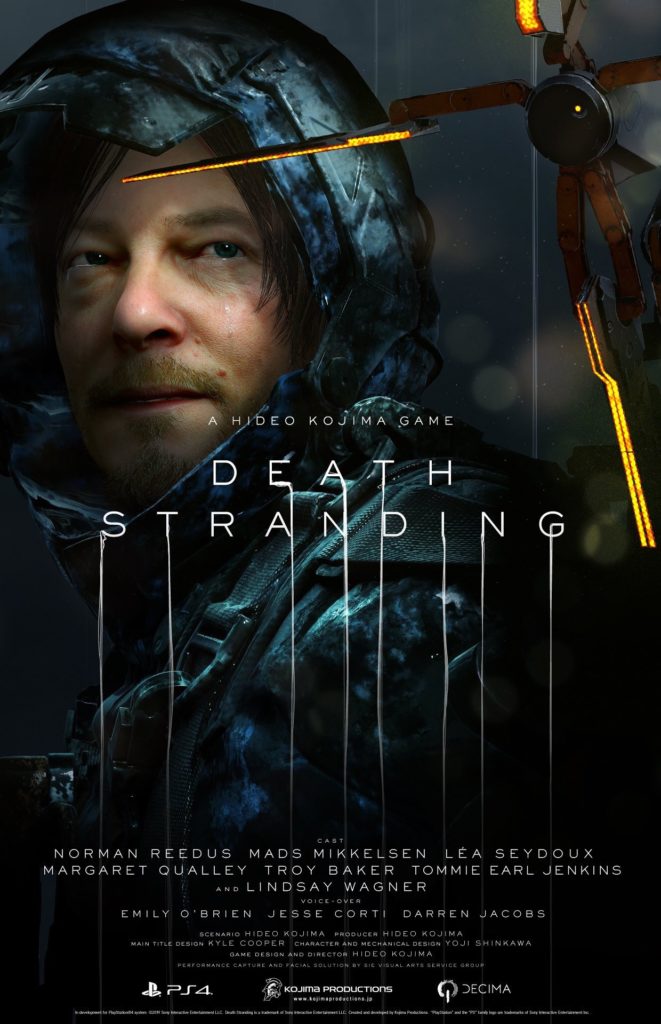
Since Video Games have increasingly earned legitimacy as an art form in the eyes of wider society, the Video Game auteur has also gained traction. Hideo Kojima, widely known for his distinctive work on the Metal Gear Solid Series, stands in the vanguard. In 2019, Hideo Kojima’s released his first production under his eponymous Studio, “Death Stranding”. The game, for which a sequel is currently in development, is a post-apocalyptic story revolving around the reconnecting of communication within humanity. The ambitious game prompted accolades from acclaimed directors and cinema figures such as J.J. Abrahams. Established film-industry figure applauded Kojima’s cinematic sensibility and strong authorial vision, invoking the concept of the auteur.

“Death Stranding” itself displays a preoccupation with male creation and creativity. The game features performances by renowned cinematic voices such as Guillermo Del Toro and Edgar Wright. Alongside them the player encounters characters played by a variety of male creators. They range from Japanese writer Junji Ito, to comedian Conan O’Brien, to Sam Lake, creative director of Max Payne and often credited as an auteur. “Death Stranding” engages with themes of male creation and reproduction through its protagonist and his “Bridge Baby”, a living, preserved, stillborn child carried at all times. Korine Powers, Phd candidate at Boston University, notices that women within the game, on the other hand, are barren, and their attempts at reproduction fail. The game’s world is a world without female creation.

Hideo Kojima’s “Death Stranding” as a result becomes a microcosm of the Video Game auteur. The game is clearly courting the label, celebrating male creative individuals. But it also reproduces the sexist bias of the auteur label, its hesitance to credit female creativity.

In the Video Game Industry, rife with misogynistic bias and predominantly occupied by men, that is an issue. Historically, women have been excluded from credit in creative roles. Musicologists by the names of Andrew Lemon and Hillegonda Rietveld have conducted valuable research on the exscription, or exclusion, of women, studying the all-female Capcom Sound Team of the early 1980s. These hugely creative women were nearly lost to history due to the company’s pseudonym crediting policies. Crediting remains a perennial issue, despite its importance in a hugely competitive industry.

Capcom 1980s Sound Team (Source: Deezer)

The issue of written credits is more literal than the issue of the auteur. However they broadly interlink. The contributions of the multitudes of creative, hard-working developers, musicians, and writers, will get lost if our discussions treat games as the children of a single genius mind. While the reference to an individual ‘Auteur’ creator may be useful, the term erases the collaborative dreams and sweat that make a game. At worst, it can misattribute art, producing misinformation of creation. The effect is, in essence, the erasure of credit.

In many ways, Video Games are still a relatively young medium. That means that their history is still in the process of shaping. Rejecting the Video Game Auteur as a sign of legitimacy is a valid, achievable option. Several figures within the industry have stood up for games’ communal creativity, despite finding themselves on the receiving end of the label. Warren Spector, who has worked on influential Immersive Simulator games such as “Thief” or “Deus Ex”, has been fighting the label ‘the creator of Deus Ex’ since the 2000s. Josh Sawyer continuously emphasises the team of developers responsible for the beloved game “Fallout: New Vegas.” Video Game culture does not need to follow the narratives of cinema to hold its claim as an art. The opportunity to embrace a history of diverse and multi-fold creativity lies still in reach.

Sources

Andrew Lemon and Hillegonda C.Rietveld, “Female credit: Excavating Recognition for the CapCom Sound Team” & “The Street Fighter Lady. Invisibility and Gender in Game Composition”

IGN, “Deus Ex 2”

Korine Powers, “Playing Pregnant in Death Stranding”

The Uncomfortable Romance Of Role Playing Games

Love can be strange to represent in video games. Outside of dating simulators or other explicitly dedicated games, Role Playing Games (RPGs) such as Bethesda Studio’s iterations of the Elder Scrolls or the post-apocalyptic Fallout series, frequently offer the player choices for romance. As Bethesda is gearing up for the release of their new RPG, Starfield, I want to look closer at systems of romance in previous Bethesda games. Such an examination presents curious results. Romance systems can offer avenues to enjoyment and queer content. But at their core they can also tell us how people approach love in real life.

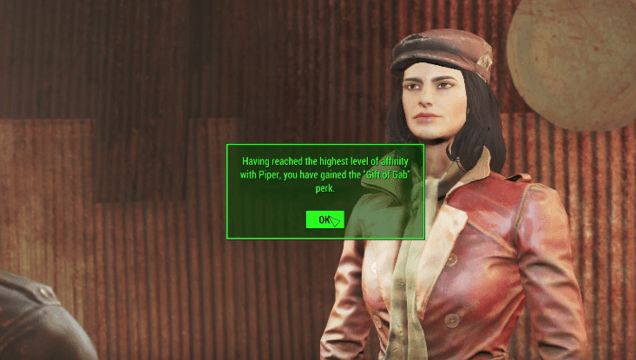
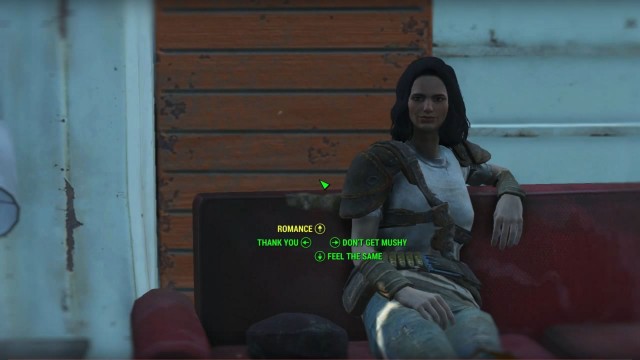
The Elder Scrolls V: Skyrim falls short in its options for romantic companionship. To marry in Skyrim, the player presents a specific artefact to their partner of choice. That spouse then benefits the player in transactional ways, often sharing goods and income. Useful, yes, but not much of a shot at depicting romance. One of Bethesda’s other games, Fallout 4, makes a more earnest effort. The player here can romance most (and any amount) of their companions through dialogue options. These options appear if the companion morally approves of the player’s actions, maximising the companion status. The relationship is then further enhanced through the completion of companion quests, which only surface when the companion trusts the player.

Artefact used for Romance in Skyrim

The result of the developed romance mainly consists of occasional romantic dialogue, and cheeky corner animations after sleeping. In a way, this brings us closer to actual love and romance at least; the player has to appeal to their companion through their actions and characterisation. As a result, such romances can be fun to achieve, especially for any players that wish to create queer content in their RPG experience, as all romance-able characters will be attracted to the player regardless of their gender.

Relationship development boons in Fallout 4
Dialogue Option in Fallout 4

Yet, as enjoyable as using these mechanics can be, there is something inherently odd about them. Due to their optional nature, they never affect a player’s gaming experience significantly. Your companions in the end are still a transactional boon as far as the game is concerned. Everything else is left solely to the player’s imagination of a NPC(non-player character) with little dimension. The reality of their emotion and romance bears little depth to the characters and their world. It contributes to the feeling that the world of the game is made for you, the player. It revolves around you, its inhabitants ready to offer quests, be romanced, or shot.

To allude to the concept of the ‘Gay Button’, Romance mechanics are also not a satisfying definite inclusion of queerness, since only the player can initiate queer content. In contrast, I think RPGs without real romancing options can often be much stronger. Games such as Fallout: New Vegas or The Outer Worlds instead give their characters innate sexualities and identities that affect how they interact with the world around them. As a result, the game’s world feels more immersive. The world is made for the player, but it feels like it could exist on its own. That yields bigger benefit to me than creating a virtual romance thought experiment.

Philosophically, the idea of love as something you can achieve, with anyone, with the right kind of lines, resonates uncomfortably with modern dating discussions.

At its most harmless, it reminds me of the way people can talk about online-dating. There is this idea of making love logical, of having a set of lines that guarantees success. In dedicated communities, participants seem to attempt generalised advised about how profiles should look like, or what opening lines will guarantee success. The complexities of attraction and conversational dynamics become streamlined into over-promising codes and guides. This is not to say that anyone can be blamed for investing in this promise. Relationships are difficult, and it is natural to wish for a simpler narrative. But ultimately, they are still oversimplified narratives.

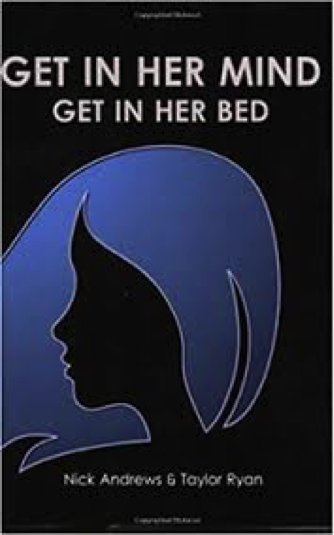
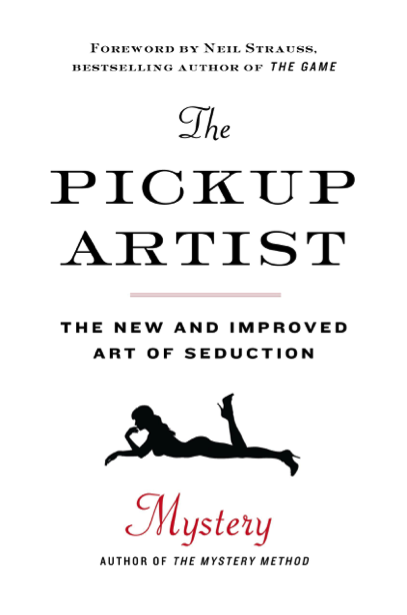
A parallel at its worst, the ideology of Pick Up Artists treats women like an RPG Romance system treats NPCs. They are not given interiority, but reduced to calculable responses and behaviours. It is not uncommon to hear about women’s “programming” by such people. They predict the outcome of certain dialogue lines and ‘openers’ or actions in their ‘game’, not giving much regard to the object of their desire.

But what is the point of such an abstract discussion of a mere fun game mechanic? Well, maybe games replicate life a lot more than we think. Maybe games with one-note Romance systems are not as fun as thoughtful characters because they replicate something that does not help love in real life either. If the media we consume shapes how we interact with the world and people around us, it bears thinking about what fantasies about romance our media sells to us. Love and Romance is complicated, but much more successful when we respect our partners’ feelings and interiority. The temptation to retreat into simpler, classifying narratives provides little benefit. The more depth we allow for, the more we can make out of relationships.