
And the worms shall inherit the earth – A literary conspiracy theory

Frank Herbert’s Dune is an influential and seminal work of Science Fiction. With a cult classic adaptation by director David Lynch and an on-going high budget interpretation by Denis Villeneuve, the books of the Dune universe have amassed a sizeable following. Notably, in memetic responses, fans have iconised a particular element of the universe’s lore: The Sand-worms.

Worms feature across serious and joking fan engagement with the books. The 1976 sequel Children of Dune often is a focus of this engagement, because one of its protagonists transforms into a giant immortal sand-worm-human hybrid being. However, this culture around Dune’s worms also draws on the initial 1965 novel. An awareness of this floated in my mind when I read Dmitry Glukhovsky’s post-apocalyptic horror novel Metro 2033. As intrepid protagonist Artyom stumbled upon a cannibalistic cult that worships a giant worm god, that awareness drilled itself to the front of my thoughts. I could not help but wonder, is there a relationship here? And why worms?
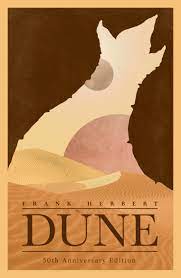
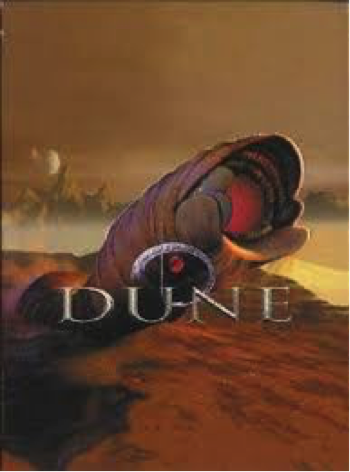
It is hard to say if Dmitry Glukhovsky was inspired by Dune’s Sand-worms. Regardless, it would not be surprising if the influence were direct, as one may point to many similarities. Both Sand-worms and The Worm God are worms blown out of proportion, gigantic. They are divine and primordial beings. Although Metro 2033’s Worm God is explicitly a fiction within the novel, it is depicted and lent credence as an old, unfathomable being of creation. The worm, within the cult’s beliefs, created the world and the tunnels, gifting authority over the world to humans in its absence. The worm god is older than humanity, and implied to outlast it, punishing humans for their environmental destruction and violence.

Dune depicts its Sand-worms from two perspectives. Initially, we learn about them from a colonising perspective. The houses that occupy the desert planet Arrakis see the Sand-worms as threats to human mining of the planet’s natural resource, Spice. The noble houses of Dune’s world desire Spice as a highly valuable industrial resource primarily, as it is used for space travel. Throughout the novel the protagonist Paul transitions from allegiance with noble houses to allegiance with the native inhabitants of the planet and desert-people, the Fremen. Our knowledge of Spice and the Sand-worms realigns accordingly.

Initially, the reader learns of Spice as a hallucinatory substance, involved in the Fremen’s rich and nuanced religious rituals. Ultimately, this shift from industrial to spiritual extends to the worms. The novel reveals that the Fremen revere the Worms as Gods, and that the Sand-worms create the Spice. Just as Metro 2033’s worm god, the Sand-worms are ambiguous, ancient forces of creation. The Fremen, unlike their industrialised colonisers, do not have adversarial relationships with the Sand-worms.  An important Fremen rite includes the riding of a Sand-worm.
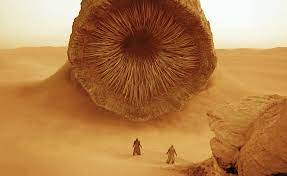
The Sand-worms form part of a contrasting approach to technology and nature. The Fremen operate on minimal technology and are well adjusted to their desert environment, without becoming ‘noble-savage’ stereotypes. Their counterparts, industrialised oppressive rulers, on the other hand, are aligned with an idea of industrialised modernity. They are at odds with the desert and view the natural environment as an exploitable resource.
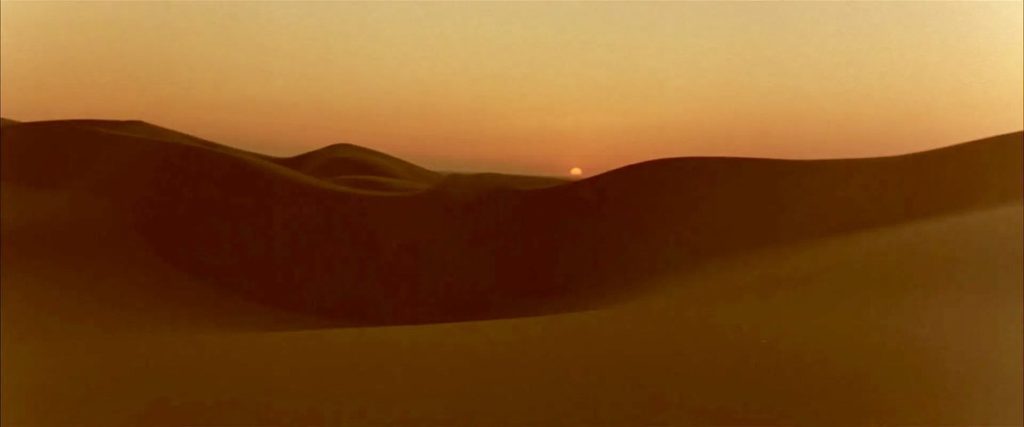
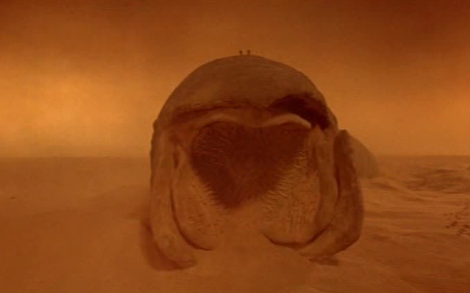
Arrakis or Dune, Dune (1984)

Worms as a force of nature and environment, opposite to technology, persist similarly in Metro 2033. The old man who invents the Worm religion creates it as anti-technology, demonising modernised man and his environmental destruction. The worship of the worm God includes ceding agency to a natural primordial force, and atoning for mankind’s scarring of nature. The cult rejects technology in their life and returns to pre-modern technologies such as bow and arrows. They present one of the only factions in the novel without guns, displaying active hostility towards them.

Here we have a core similarity then: Worms in both works are powerful agents of the natural world. They are counter points of agency, aligned with the environment and primordial, pre-human creation. It is worth pointing out that the portrayal of their people differs: the reader will automatically sympathise less with the cannibal cult than with an exploited and hunted indigenous people. But this does not diminish that their respective worms seem to communicate the same message about and relationship with natural forces. That kind of relationship resonates in these two works that engage with the apocalypse, though be it in different ways.

Artistic rendering of face off between Worm cultists and armed protagonists in Metro 2033, Cheval-tigre (CG Society)

But, while this answers my first question- is there a relationship-, my second question remains. Why worms? I can only theorise, but one key possibility stands out to me. Let me take you on my little conspiratorial route.

Worms, unlike other animals, have a bigger capacity for the alien. In Dune, they are quite literally alien, in the sense of extra-terrestrial. But worms are also alien in the sense of being estranged from the human, or what we can personalise. Humans generally seem to more easily anthropomorphise or generate empathy for certain animals. I would boldly generalise that the more features humans share with an animal, the easier they empathise or find the animal aesthetically pleasing. Insects generally receive less empathy than most other animals with their exoskeletons, many legs, too many eyes, or other features many humans find revolting.

Worms are slimy and squishy, flexible. They are, unlike us, not vertebrate, without a backbone. They have neither interior skeletons nor exoskeletons. Most notably, they have no eyes. Many design theories often argue that eyes in particular aid humans to identify and humanise creatures. One could look at District 9’s choice to give its alien protagonist, with whom the viewer is meant to sympathise, child-like eyes, big and round. On the other hand, the Alien Franchise designs its dangerous Xenomorphs completely without eyes. If we appropriate this theory for our eye-less worms then, one may argue that worms are in many ways a type of life that is aesthetically and conceptually far enough removed from humans to make them prime candidates for alien beings.
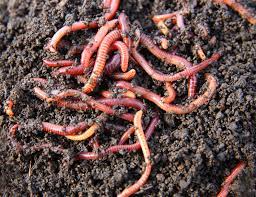
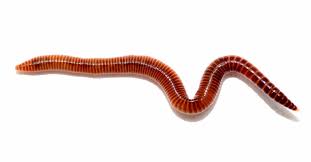
Commonly, we also associate worms with the earth in which they life buried. There is a link to death here as well, through expressions associated with death that feature worms: “Counting worms” or “Food for worms”/ ”Worm Food”. Of course, worms cannot even leave behind in their death the bones whose company they keep. If the two discussed works posit their worms as outlasting humanity, so do some of our English common expressions.

Worms are beings, then, which can be easily made alien and associated with the most primal natural element, the Earth. They carry connotations of outlasting us buried in the deep earth. Dune and Metro 2033 utilise them as an apt tool to tap into our relationship with the Earth and our Environment. These stories imagine primordial forces that are alien to humanity and more long-lasting, creators of the space mankind inhabits, with worms as their willing vessel.

Memetic though it can be, these imaginings are certainly not coincidental and are extremely telling. They glimpse into how stories dissect industrialisation, technology, and modernity, and the role nature and environmental agency must play in those considerations. They tease the fading horizon of humanity and picture the Earth’s alien invertebrate inheritors.
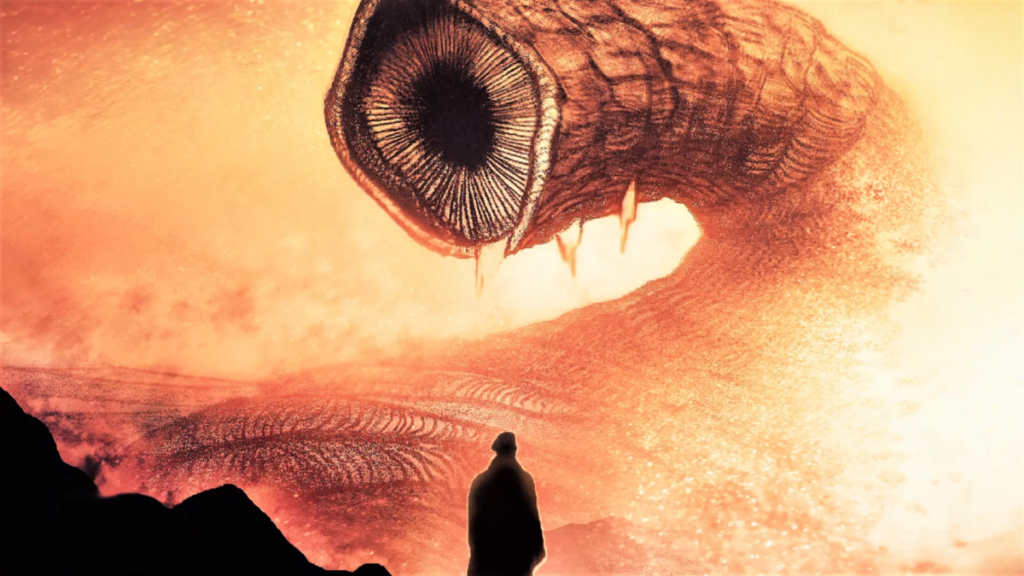
Fan Art of Sand-worm, WikiData

Post-apocalyptic Naturalism, the Road, and the Last of Us

Back in October I snuck into a Symposium on American Literary Naturalism and the Visual/Digital held in UCC, excited by a glimpse of academic Video Game discussion. On that day the 13th, Sarah McCreedy discussed New Naturalism and Video Games, with a particular focus on Naughty Dog’s 2013 post-apocalyptic action adventure The Last of Us.

She argued that though less discussed, video games such as The Last of Us engage with a new kind of naturalism. This new naturalism updates conceptions of determinism, instead highlighting the illusion of free will under neoliberal capitalism.

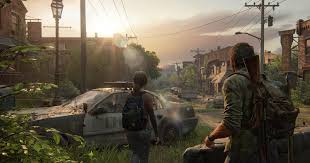
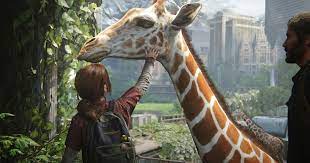
The Last of Us depicts a type of quint-essential American story, a journey across America that is ultimately fruitless. In the process, it features moments of beauty and nature. It also emphasises an intent of being grounded and realistic, honing in on resource allocation and scarcity among other features. As such, it resembles other American works of Naturalism. I myself recently read Cormac McCarthy’s The Road, a novel to which The Last of Us closely relates. Both works track a journey across a changed American landscape, a landscape that inspires awe both in negative and positive senses.

Sarah McCreedy’s conception of The Last of Us as an updated type of Naturalistic story explores media interaction and its fascinating impact. Video games engage in a dance of interactivity with their player. There is a relationship between player, game, and character that implies choice for the player, a power to shape their own, personal experience. This idea of Free Will turns out to be deceptive, McCreedy argued, as the linearity of the plot comes to light. The player cannot impact the choices Joel, the game’s protagonist, makes in cut scenes and vital plot moments. I find this observation interesting for its awareness of medium. The Last of Us and The Road share a lot of similarities. However the idea that the themes and messages of these stories transforms due to the ways Readers/Players experience the respective text spawns fascinating questions. Maybe The Road does create a sense of determinism through its introduction of slowly creeping threats and the passivity the reader holds as, for example, the protagonist’s deadly sickness develops. The Last of Us threads the player and Joel together, but the player is alienated from Joel in the most crucial ending moments, rupturing the player’s conception of choice. That kind of illusion of Free Will and deceptive personalised experience permeates a lot more Video Games than The Last of Us. Does this make Video Games an art form suitable to thrive in Neo Liberal Capitalism?

I could write about the latter question at length. Many Role Playing Games, Action-Adventure Games, and Shooters offer moral choices and customisation of character to differing degrees. But since the programming of the game must be realisable, the large scale impact of these choices often only goes so far as a few different endings to achieve. One of my favourite game series, the Bioshock Series, tackles questions of Free Will by denying the player significant choice and impact. The first game in particular weaves the player’s lack of free will into its plot, accompanying a critique of libertarianism and exploitative capitalist structures.

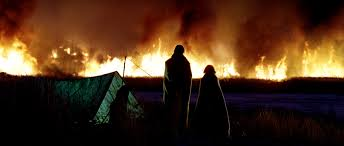
From the film The Road(2009)

Yet, the note on which I want to conclude is different. Honouring the Naturalistic work’s focus on nature, there is an additional argument I would venture to make. The Road and The Last of Us are both works of the post-apocalypse, of the transformed environment and natural space. Their different approaches to choice and the illusion of free will are present in their approaches to post-apocalyptic space. Both perpetuate a conception of lack of human agency and choice in worlds which have been taken away from human authority. Both texts further engage with the threat of human extinction. Meanwhile, nature has reclaimed and eroded human buildings and landscapes. In The Road, the conquering of mankind by the dead world around them is deterministic, and uncontested. People may struggle against each other, but they can only run away from the snow, darkness, earthquakes and fires.

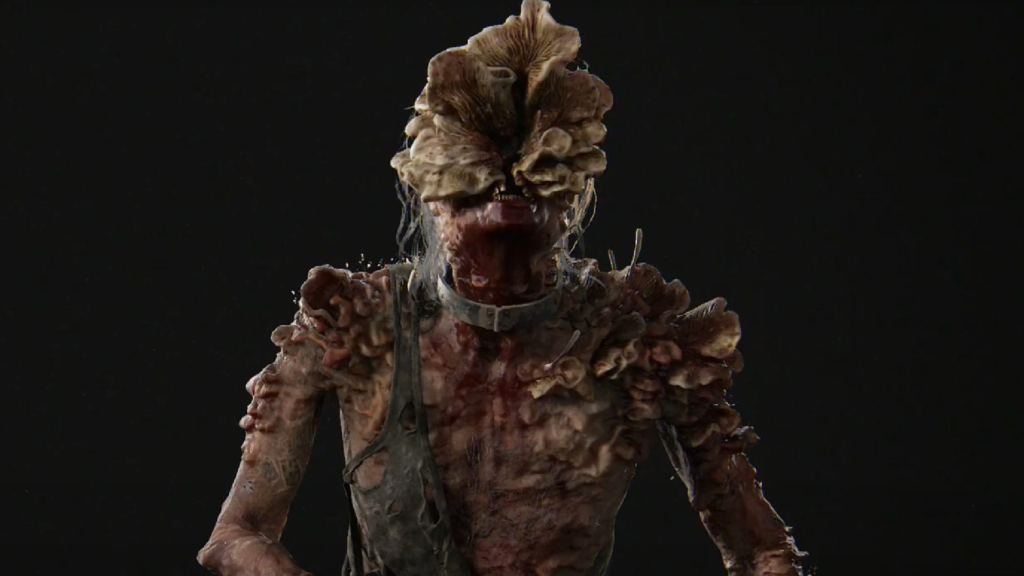
Infected from The Last of Us

As Zombie media, The Last of Us provides undead enemies which the player fights as well as other humans. The virus that creates the undead, a fungi, links them to nature. They look no longer human, appearing overgrown. Through them, the player is given agents of the transformed natural space to combat. As a result, the game provides an illusion of ability to fight the post-apocalyptic natural space, unlike The Road. It is a miming of human agency that turns out to be as deceitful as the game’s Free Will, as the quest to find a cure dissolves.

Applying the paper’s argument to space reveals a core aspect of the post-apocalyptic genre. Agency, human systems, and the Natural link between each other to reveal multitudes of causality and effect. Naturalism, new or old, forms but only one approach to our place in a transformed world.

Orwell’s Keep the Aspidistras Flying: An Exercise in Self-Flagellation and Doubt 

Can we extricate ourselves from the society we live in? How can someone create art in a commercial society?

Gordon Comstock lives in rebellion. He seeks to defy “the money-god”(48). Yet money torments and poisons his every thought. He wishes to write creatively, free from moneyed ideas of success. Yet his squalid poverty embitters him, choking his work in its crib. He accuses everyone around him of being obsessed with money. Yet he is the most obsessive and resentful in his environment. Gordon Comstock has not escaped money.

George Orwell’s 1936 novel Keep the Aspidistras Flying presents us in many ways with a bleak reality. There are repeated themes of staleness, deadness and decay surrounding the protagonist’s life. 

Gordon submits himself to a gradual squalid decay through poverty; first in his clothes, then his relationships and surroundings. This fate is self-chosen. Gordon quits his ‘good’ job out of a defiance of the ways in which money structures his (our) society. He frames it as an act of satanic rebellion in Milton’s sense: “Better to reign in Hell than serve in heaven; better to serve in hell than to serve in heaven.”(48) Declaring war on money, he wishes to escape its hold on his life. Therefore he accepts a job in a bookshop for two pounds a week rather than continuing a job in advertising which commercialises his creative writing talent.

Many a creative can relate to Gordon’s instinct of romantic rebellion. Of course, it would be wonderful to thrive of one’s uncorrupted creative talent. In his rare optimistic moments, Gordon wants to believe that he will still be able to make a living with poetry. After all, he has already published a book of poems with ‘exceptional promise’ according to some reviews; a promise upon which his magnum opus “London Pleasures” would build if he could only write it. But his success never truly arrives. Like so many artists, be it writers, musicians, or painters, he has to compromise his talents, employ them in a job that corrupts his writing, turns it away from his true visions. Instead, he attempts to seek rebellion in defying success.

As sympathetic as we may be to his plight, his romantic rebellion is futile. Gordon does not really defy money. In choosing  ‘noble’ poverty, he instead narrows all his waking thoughts to money. He cannot write because of the squalidness of his life, and thus creativity leads back to wealth. There is no success in ever creating any lasting work or being in any way content with anything he writes, since his thoughts are driven solely by his material condition. He has a complicated relationship to his few friends because he has no money, but is also too proud to accept their help. He denounces women as unattainable to him because he is poor, despite the fact that there is a woman, Rosemary, who cares for him and stays patient throughout his spells of cruelness and lack of comfort in their relationship. But Gordon suspects she must in actuality despise him and refuse to sleep with him because he has little means. It seems to be obvious to him –“Of course it all comes back to money.”(124)

Even though readers may sympathise with his plight, the novel makes it increasingly easier to dislike Gordon. He is resentful, paranoid, prideful, and bitter, and he lashes out at everyone that wishes to help him. The true tragedy lies in the fact that Gordon is maybe not wholly at fault. He idealistically assumed that he could escape his money-driven society on an individual level solely by defying its ideas of success. However the idea of money poisons his life more through his rebellion than before, as he degrades and tortures his environment. His commitment to poverty may be initially romantically justified, but is ultimately useless. Rosemary’s pregnancy eventually forces him to return to the ‘good’ life and ‘good’ job, which inspires a feeling of relief as he admits that his attempt to live outside “the money-world” (266) brought nothing but misery.

What Gordon fails to recognise is that he never did leave the money-world. Nor does his rebellion break his creativity free from corporate fetters. His individual show of rebellion towards money and success demonstrates that one cannot escape one’s society. During the two years he spends in rebellion, he gains no positive gain or pleasure in any alternative world. He remains unable to write any meaningful work. Instead he just lets go of any effort or pleasures in life, turning rebellion into spite. Rosemary eventually proclaims to him that all he wishes is to “just sink”(218) into the mud. In truth he doesn’t want to live nor can he live outside the systems of profit and capital that characterise his environment. All he can do is spite its ideas of success and ‘good’ life, all to his own detriment. The novel does not present social reform as an option either. Ravelston, a rich publisher and “parlour socialist”(194) represents a cynical, surface deep socialism within the story. Ravelston’s position surrounds Socialism with an air of hypocrisy and ingenuity that the novel does not care to dispel.

What is left for the reader is a novel that provides no hope of escape or resolution. Gordon Comstock’s story wants to tell us that there is no way to extricate oneself from our society the way it is structured. Any defiance ultimately leads you deeper into its clutches or is disingenuous. All ways ultimately lead back to miming a performance of respectability and realignment with the goals of accepted society. Such a lack of Orwell’s typically ardent belief in socialism and reform within this particular text creates an interesting artefact in this cynical novel. It coheres with Capitalist Realism, the cultural malaise and feeling that there is no alternative to capitalism; and that it is easier to imagine the end of the world. In this manner, I found this novel to be strikingly resonant.

Almost 90 years later, feelings of entrapment in the structures of society that govern our lives have arguably increased. Compared to contemporary society with its complicated supply and distribution chains, Gordon Comstock probably would have had an easier time attempting his release. Meanwhile, how could I suggest or advocate escape while the very technological devices on which I write and you read this reflection are tied to the exploitation of natural resources and injustices in countries far removed. How can we still create meaningful, challenging, and uncompromised art when we cannot extricate ourselves from the unjust society we are able to recognise?  This text does not aim to suggest that the novel’s implications were right and should go unchallenged. However, even though it is not Orwell’s best and most subtle work, maybe Keep the Aspidistras Flying is a difficult and necessary read because it confronts us with an uncomfortable tragedy. It is a sort of tragedy that makes us stare in the face of our complicity and entanglement with systems even as we intellectually unpack them again and again.

Sources

Orwell, George. Keep The Aspidistras Flying. London, Penguin Books, 1936.

Image: Cover of Penguin Edition, photographed by author.