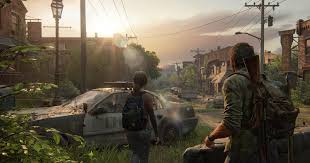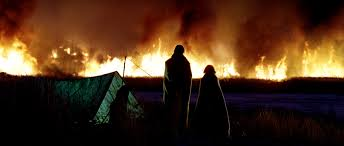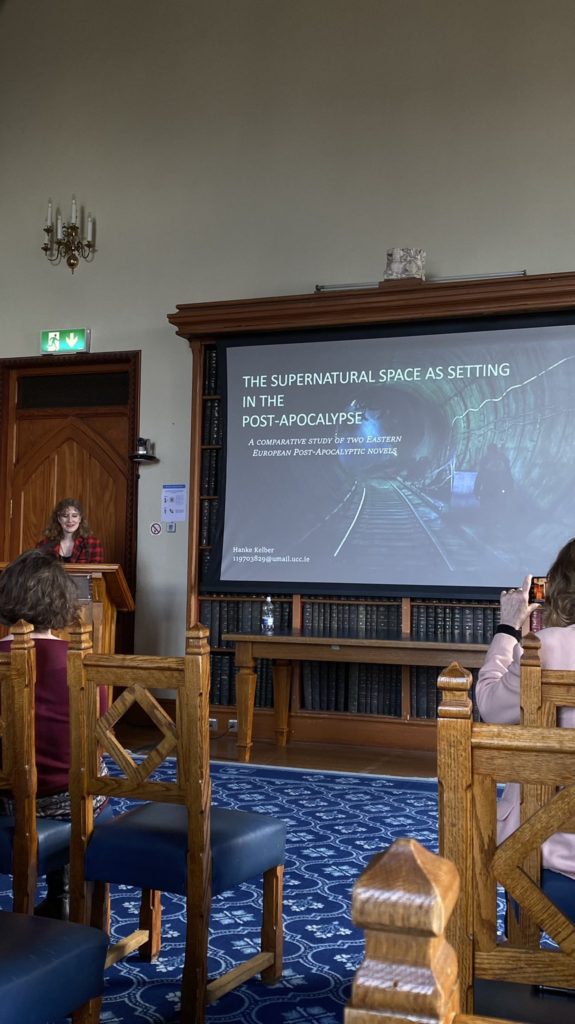

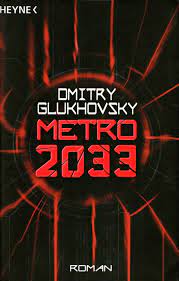
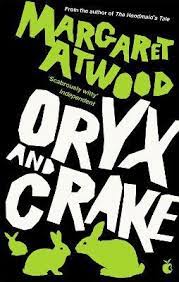
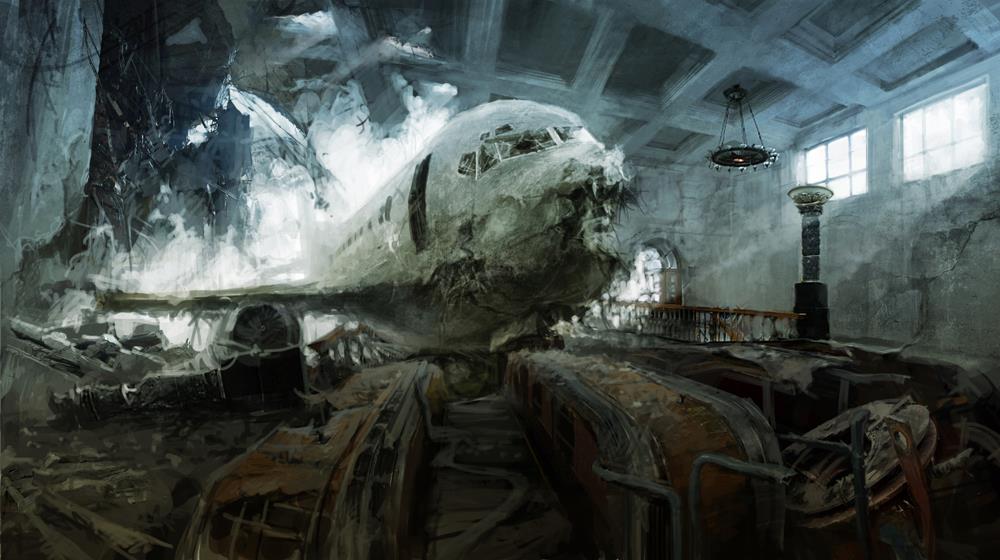
My thesis examines the role of the Supernatural and its tie to Environment in post-apocalyptic works. The project will involve the comparison of several texts that engage with post-apocalyptic settings and premises. The primary works covered within this cultural comparison will be Roadside Picnic by the Strugatsky Brothers, Metro 2033 by Dmitry Glukhovsky, The Road by Cormac McCarthy, and Oryx and Crake by Margaret Atwood. The comparative study will explore different approaches to depicting non-human agency and mankind’s relationship to their environment. Some of the selected works, those that emerge from a Russian context especially, employ the Supernatural to emphasise non-human agency more explicitly than the contrasting Anglophone works. My research will include an investigation of the cultural contexts that inform this difference, and what the contrasting approaches imply about these works’ commentary on non-human agency and environmental relationships.

Narratives of utopia and teleological narratives concerning technology, which centre human mastery of nature, form a crucial component in situating the texts. These narratives will contextualise the depiction of environment and space in the cultural contexts from which the differing texts emerged. The work of Lyman Tower Sargent, such as “Colonial and Postcolonial Utopias” or “Colonial Utopias/Dystopias”, will situate my work in concepts, narratives and localisation of Utopia. Sargent’s “The Three Faces of Utopianism Revisited” addresses key concepts of Utopia. Importantly, Sargent defines ‘Anti-Utopia’ as a ”non-existent society described in considerable detail and normally located in time and space that the author intended a contemporaneous reader to view as a criticism of utopianism or of some particular eutopia(positive utopia).“(Sargent, 9) ‘Anti-Utopia’ will provide a key concept for my thesis, parsing post-apocalyptic works as reactions against culturally specific Utopian narratives.
Other critical works utilised to confound this relationship include Edward James’s “Utopia and Anti-Utopia”, Peter Fitting’s “Utopia, Dystopia and Science fiction”, and Jacqueline Dutton’s “‘Non-western’ utopian Traditions”. Elana Gomel’s critical work can situate Roadside Picnic and Metro 2033 as responses against Utopian narratives of Soviet and Post-Soviet culture. “Gods like Men: Soviet Science Fiction and the Utopian Self” and “Science Fiction in Russia: From Utopia to New Age” examine Utopian Russian narratives which contextualise the Russian works’s approaches to Anti-Utopia. Matthias Schwartz links Environment, Soviet Anti-Utopia, and relationship to state narratives in discussion of Metro 2033 in: “Utopia Going Underground: On Lukyanenko’s and Glukhovsky’s Literary Refigurations of Post-socialist Belongings between Loyalty and Dissidence to the State.” To contextualise Environment and anti-utopia narratives further, I will employ Susan Buck-Morss Dreamworld and catastrophe: the passing of mass utopia in East and West. Buck-Morss’s work will provide a counter-part, examining Anglophone and ‘Western’ Utopian narratives. Brian Stapleford’s “Ecology and Dystopia” and Rowland Hughes and Pat Wheeler’s ““Eco-dystopias: Nature and the Dystopian Imagination”, through their eco-critical approach to utopia and dystopia, provide a connection between concerns of environment and (anti-) utopian narratives. This connection is crucial to my thesis’s linking of culturally specific utopian narratives with an eco-critical and environmental approach to post-apocalyptic works.

To situate connections of the Supernatural, Agency, and Environment, I will utilise the concept of the Eco-gothic in my approach. EcoGothic, edited by Andrew Smith and William Hughes, explores the Gothic through eco-criticism with roots in the Romantic and contemporary environmental concerns. Environment becomes a “semiotic problem”(Smith and Hughes, 3), challenging narratives of human subjugation of nature. The Gothic Nature Journal examines this relationship of Gothic, Supernatural, and Nature further: “Nature is consistently constructed in our stories as Other, excessive, unpredictable, disruptive, chaotic, enticing, supernaturally powerful, and, perhaps most disturbingly, alive.”(Parker and Poland,1)Nature as Gothic and Other presents a key theme of my thesis, a relationship advanced by the concept of the Eco-Gothic. Locating the Supernatural post-apocalypse further in ‘weird’ fictions, Roger Luckhurst’s “The weird a dis/orientation” traces a tradition of fictions that lend agency to the non-human through representations of the incomprehensible and supernatural.
Elana Gomel’s Narrative Space and Time: Representing Impossible Topologies in Literature serves as a link between science fiction stories and the Othered environment. Gomel regards the manner in which science fiction stories attempt to represent negative and impossible spaces. The Eco-Gothic environment defies human efforts at order and subjugation in a way that engenders a crisis of representation. Gomel’s examination of impossible spaces and their representation in speculative stories will thus further my thesis’s investigation of post-apocalyptic space.
Discussions of Environment and its relationship to the humans appear in existing critical works that treat my primary case studies. Such works will strengthen the connection between my theoretical approaches with the close reading of primary case studies. Gabriel Burrow’s “Humanizing Harmont: Place and Desire in Roadside Picnic” targets the setting of the Strugatsky’s Roadside Picnic, investigating the threads between the town, the Supernatural Zone, and desire. Bill Hardwig’s “Cormac McCarthy’s The Road and ‘a world to come’” and Lydia Cooper’s “Cormac McCarthy’s The Road as Apocalyptic Grail Narrative” examine the unusual nature of The Road’s dead landscape. Eco-critical approaches crop up in criticism of Oryx and Crake, such as Nazry Bahrawi’s “Hope of a hopeless world: eco-teleology in Margaret Atwood’s Oryx and Crake and The Year of the Flood” and Valeria Mosca’s ““Crossing Human Boundaries: Apocalypse and Posthumanism in Margaret Atwood’s Oryx and Crake and The Year of the Flood”. These works explore the power of environment and space to affect and mutate human senses of self and definition.
Kathryn Yusoff’s A billion black Anthropocenes or None, “Anthropogenesis: Origins and Endings in the Anthropocene” and “Climate change and the imagination” target different facets of human agency narratives and apocalyptic visions. These examinations will round out my environmental approach through their examination of the ‘Anthropocene’, a term closely tied to human agency. Marginalised visions and contemporary apocalyptic narratives create further nuance in Yusoff’s discussion of agency and apocalypse, which will diversify and refine my research approaches.
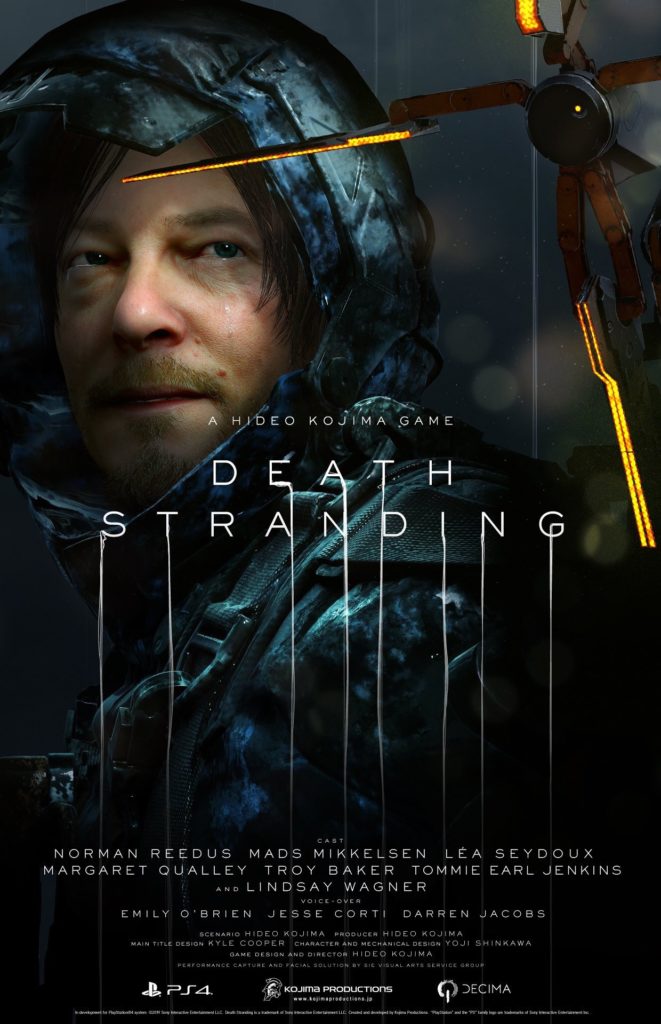
The research aims of my thesis draw on a wide range of critical approaches and concepts. The texts here highlighted are in the areas of Utopian Studies, the eco-gothic, and thematic focuses on agency. They are the most prominent among many texts that will connect the post-apocalyptic works’ approaches to the Supernatural, environment, and how they are situated in cultural contexts. While the possibility to dive into fields of Adaptation and Digital Media is available, my thesis may only pursue these avenues if the selected research yields a connection.
Sources
Bahrawi, Nazry, “Hope of a hopeless world: eco-teleology in Margaret Atwood’s Oryx and Crake and The Year of the Flood,” Green Letters, Vol.17, Iss.3, pp.251-263.
Buck-Morss, Susan, Dreamworld and catastrophe : the passing of mass utopia in East and West (London: MIT Press, 2002).
Burrow, Gabriel, “Humanizing Harmont: Place and Desire in Roadside Picnic,” Foundation, Vol.50, Iss.140, pp.5-17.
Cooper, Lydia, “Cormac McCarthy’s The Road as Apocalyptic Grail Narrative,” Studies in the Novel, Vol.43, Iss.2 (2011), pp.218-236.
Dutton, Jacqueline, “‘Non-western’ utopian Traditions,” in The Cambridge Companion to Utopian Literature, ed. By Gregory Claeys (Cambridge: Cambridge University Press, 2010),pp.223-258.
Fitting, Peter, “Utopia, Dystopia and Science Fiction,” in The Cambridge Companion to Utopian Literature, ed. By Gregory Claeys (Cambridge: Cambridge University Press, 2010),pp.135-153.
Gomel, Elana, “Gods like Men: Soviet Science Fiction and the Utopian Self,” Science Fiction Studies, Vol.31, No.3 (2004), pp.358-377.
—, “Science Fiction in Russia: From Utopia to New Age,” Science Fiction Studies, Vol.26, No.3 (1999), pp.435-441.
—, Narrative Space and Time: Representing Impossible Topologies in Literature (New York: Routledge, 2014).
Hardwig, Bill, “Cormac McCarthy’s The Road and “a world to come”, Studies in American Naturalism, Vol.8, Iss.1(2013), pp.38-51.
Hughes, Rowland and Wheeler, Pat, “Eco-dystopias: Nature and the Dystopian
Imagination,” Critical Survey, Vol.25, Iss.2(2013),pp.1-6.
Hughes, William and Smith, Andrew, EcoGothic, (Manchester: Manchester University Press, 2013).
James, Edward, “Utopia and Anti-Utopia,” in The Cambridge Companion to Science Fiction, ed. by Edward James and Farah Mendlesohn (Cambridge: Cambridge University Press, 2003),pp.219-229.
Luckhurst, Roger. “The weird: a dis/orientation,”Textual Practice, Vol.31, Iss.6 (2017), pp.1041-1061.
Parker, Elizabeth and Poland, Michelle, “Gothic Nature, An Introduction,” Gothic Nature, Issue 1, 2019, pp.1-21.
Mosca, Valeria. “Crossing Human Boundaries: Apocalypse and Posthumanism in Margaret Atwood’s Oryx and Crake and The Year of the Flood,” Essays, Iss.9 (2013), pp.38-51.
Sargent, Lyman Tower. “Colonial and Postcolonial Utopias,” in The Cambridge Companion to Utopian Literature, ed. By Gregory Claeys (Cambridge: Cambridge University Press, 2010),pp.200-222.
—. “Colonial Utopias/Dystopias,” in The Oxford History of the Novel in English: Volume 9: The World Novel in English to 1950, ed. by Ralph Crane et al. (Oxford: Oxford University Press, 2018),pp.300-312.
—. “The Three Faces of Utopianism Revisited,” Utopian Studies, Vol.5, No.1, (1994),pp.1-37.
Schwartz, Mathias, “Utopia Going Underground: On Lukyanenko’s and Glukhovsky’s Literary Refigurations of Post-socialist Belongings between Loyalty and Dissidence to the State,” The Russian Review, Vol.75, No.4 (2016), pp.589-603.
Stableford, Brian, “Ecology and Dystopia,” in The Cambridge Companion to Utopian Literature, ed. By Gregory Claeys (Cambridge: Cambridge University Press, 2010),pp.259-281.
Yusoff, Kathryn, A billion black Anthropocenes or None (Minnesota: University of Minnesota Press, 2018).
—, “Anthropogenesis: Origins and Endings in the Anthropocene,” Theory, Culture & Society, Vol.33, No.2 (2016), pp. 3-28.
–, “Climate change and the imagination,” WIREs Climate Change, Vol2, Iss.4 (2011), pp.516-534.