
It is incredibly likely that most people, who in any way like films, have interacted with the idea of the ‘auteur’. Alfred Hitchcock, Christopher Nolan, or Quentin Tarantino are only few of the countless directors who have received the ‘auteur’ label with their distinctive styles and creative visions. Useful as the term can be for discussion, there is no shortage of criticism of the way it reduces the complex creativity of a collaborative medium, and the way it frequently favours men. These issues rear their head once more with the rise of a new kind of auteur: The Video Game Auteur.
Since Video Games have increasingly earned legitimacy as an art form in the eyes of wider society, the Video Game auteur has also gained traction. Hideo Kojima, widely known for his distinctive work on the Metal Gear Solid Series, stands in the vanguard. In 2019, Hideo Kojima’s released his first production under his eponymous Studio, “Death Stranding”. The game, for which a sequel is currently in development, is a post-apocalyptic story revolving around the reconnecting of communication within humanity. The ambitious game prompted accolades from acclaimed directors and cinema figures such as J.J. Abrahams. Established film-industry figure applauded Kojima’s cinematic sensibility and strong authorial vision, invoking the concept of the auteur.
“Death Stranding” itself displays a preoccupation with male creation and creativity. The game features performances by renowned cinematic voices such as Guillermo Del Toro and Edgar Wright. Alongside them the player encounters characters played by a variety of male creators. They range from Japanese writer Junji Ito, to comedian Conan O’Brien, to Sam Lake, creative director of Max Payne and often credited as an auteur. “Death Stranding” engages with themes of male creation and reproduction through its protagonist and his “Bridge Baby”, a living, preserved, stillborn child carried at all times. Korine Powers, Phd candidate at Boston University, notices that women within the game, on the other hand, are barren, and their attempts at reproduction fail. The game’s world is a world without female creation.
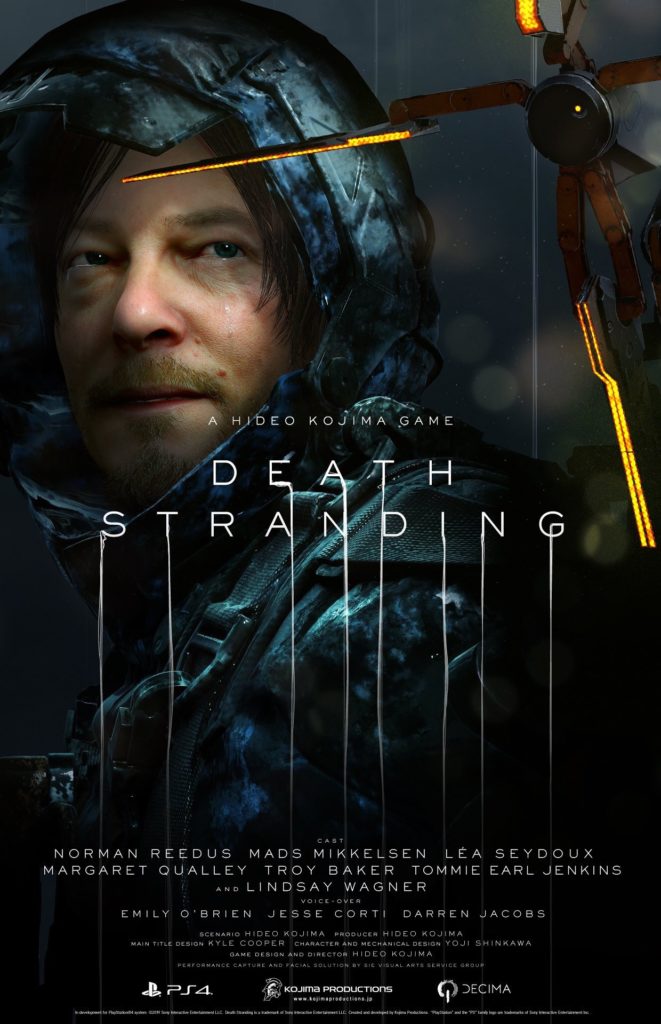
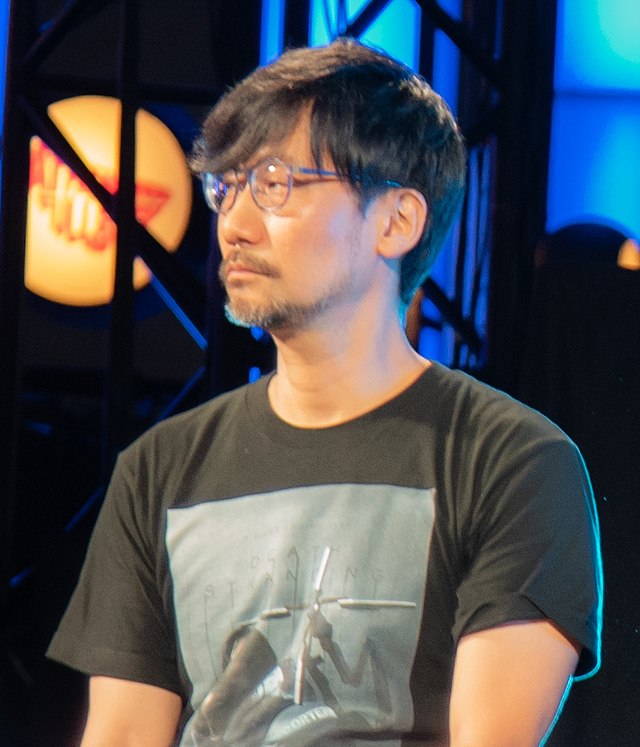
Hideo Kojima’s “Death Stranding” as a result becomes a microcosm of the Video Game auteur. The game is clearly courting the label, celebrating male creative individuals. But it also reproduces the sexist bias of the auteur label, its hesitance to credit female creativity.
In the Video Game Industry, rife with misogynistic bias and predominantly occupied by men, that is an issue. Historically, women have been excluded from credit in creative roles. Musicologists by the names of Andrew Lemon and Hillegonda Rietveld have conducted valuable research on the exscription, or exclusion, of women, studying the all-female Capcom Sound Team of the early 1980s. These hugely creative women were nearly lost to history due to the company’s pseudonym crediting policies. Crediting remains a perennial issue, despite its importance in a hugely competitive industry.

The issue of written credits is more literal than the issue of the auteur. However they broadly interlink. The contributions of the multitudes of creative, hard-working developers, musicians, and writers, will get lost if our discussions treat games as the children of a single genius mind. While the reference to an individual ‘Auteur’ creator may be useful, the term erases the collaborative dreams and sweat that make a game. At worst, it can misattribute art, producing misinformation of creation. The effect is, in essence, the erasure of credit.
In many ways, Video Games are still a relatively young medium. That means that their history is still in the process of shaping. Rejecting the Video Game Auteur as a sign of legitimacy is a valid, achievable option. Several figures within the industry have stood up for games’ communal creativity, despite finding themselves on the receiving end of the label. Warren Spector, who has worked on influential Immersive Simulator games such as “Thief” or “Deus Ex”, has been fighting the label ‘the creator of Deus Ex’ since the 2000s. Josh Sawyer continuously emphasises the team of developers responsible for the beloved game “Fallout: New Vegas.” Video Game culture does not need to follow the narratives of cinema to hold its claim as an art. The opportunity to embrace a history of diverse and multi-fold creativity lies still in reach.
Sources
Andrew Lemon and Hillegonda C.Rietveld, “Female credit: Excavating Recognition for the CapCom Sound Team” & “The Street Fighter Lady. Invisibility and Gender in Game Composition”
IGN, “Deus Ex 2”
Korine Powers, “Playing Pregnant in Death Stranding”